





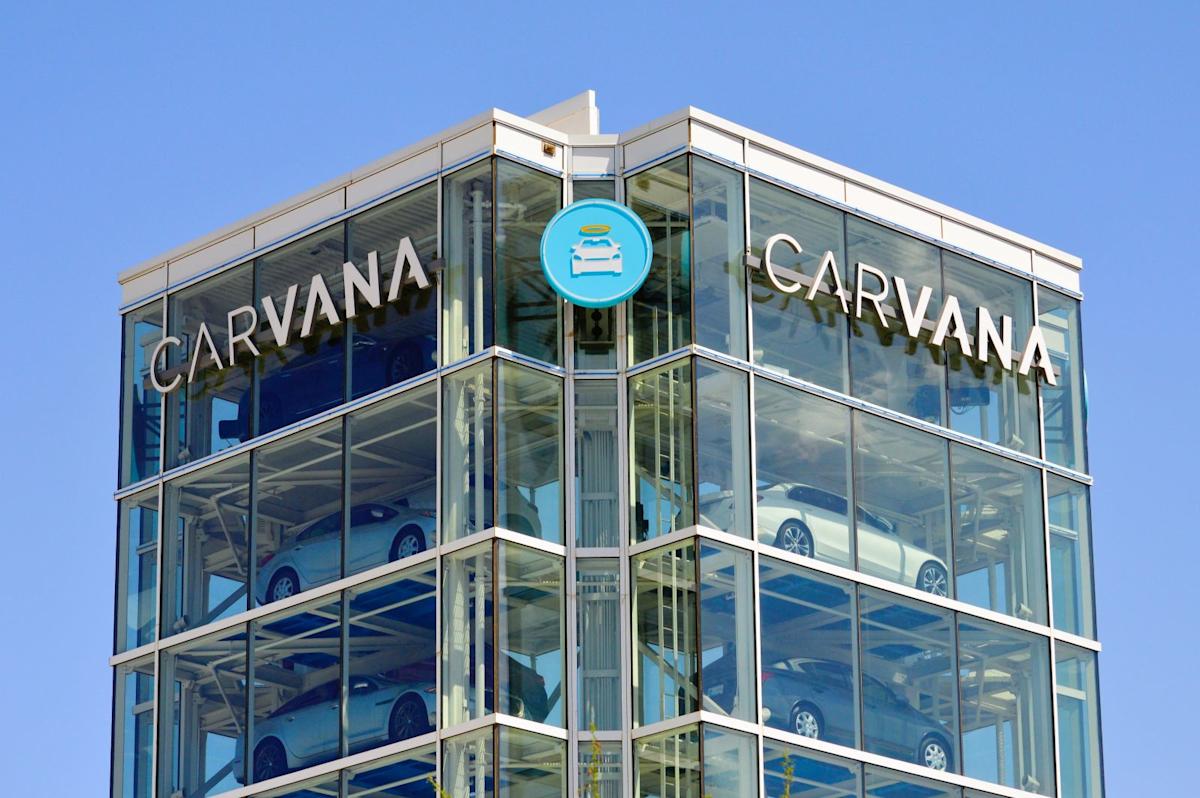
Carvana Co. delivered record-breaking revenue of $5.60 billion in the fourth quarter of 2024, according to recent financial results, yet CVNA stock plunged more than 20 percent following the announcement. The online used car retailer based in Phoenix, Arizona, beat Wall Street expectations on revenue and unit sales, but profitability concerns triggered a sharp selloff. Investors focused on declining margins and reduced profit per vehicle despite the company’s strong operational performance in the used car market.
The digital automotive platform reported retail vehicle sales surged 43 percent year-over-year to 163,522 units, exceeding analyst forecasts by approximately 5,000 vehicles. Meanwhile, wholesale volumes jumped 66 percent, contributing to total gross profit growth of 38 percent to $1.05 billion. The company operates across more than 47 states with over 30 signature vending machines and reconditioning centers, offering customers home delivery and unique pickup experiences.
CVNA Stock Performance Reflects Mixed Investor Sentiment
Despite record revenues, CVNA stock has experienced significant volatility in recent trading sessions. Shares declined 5 percent over five days and 30 percent in the past month, according to market data. Year-to-date, the stock sits 21 percent lower, though it posted a 54 percent gain over the trailing 52-week period and remains down 32 percent from its high of $486.89.
However, longer-term investors have seen extraordinary returns. Over two years, CVNA stock surged more than 381 percent, while three-year gains reached an impressive 3,122 percent. These gains significantly outpaced the S&P 500 Consumer Discretionary Index, which posted 17 percent growth over three years and 40 percent over 52 weeks.
Profitability Metrics Raise Concerns for Used Car Platform
The company’s fourth-quarter results revealed troubling profitability trends that weighed on investor confidence. Profit per retail vehicle declined by $244 on an adjusted basis, while wholesale margins contracted 18.2 percent amid heightened competitive pressures in the used car sector. Additionally, adjusted EBITDA of $511 million fell short of the $539 million analyst consensus, with margins narrowing to 9.1 percent.
Adjusted earnings per share of $4.22 beat the $1.12 consensus estimate, but analysts noted the figure was inflated by one-time charges. The underlying earnings trends appeared weaker than headline numbers suggested, according to market commentary. These factors contributed to the negative stock reaction despite strong top-line growth and unit volume performance.
Carvana Management Maintains Long-Term Growth Targets
Company leadership reiterated ambitious long-term objectives during the earnings announcement. Management projected annual sales reaching 3 million vehicles between 2030 and 2035, demonstrating confidence in the scalability of their online used car model. The company also maintained its fiscal year 2026 EBITDA margin target of 13.5 percent, suggesting expectations for improved profitability ahead.
In contrast to margin pressures, Carvana reported progress on balance sheet health. Total debt was reduced to $4.83 billion, strengthening the company’s financial position. The firm sources inventory through auctions and trade-ins, reconditions vehicles at dedicated inspection centers, and generates revenue from vehicle sales, financing interest, and protection plans.
Analyst Ratings Remain Bullish Despite Stock Decline
Wall Street analysts maintain a predominantly positive outlook on CVNA stock despite recent price weakness. The consensus rating stands at “Strong Buy” based on 23 analyst ratings, with 15 “Strong Buy” recommendations, three “Moderate Buy” ratings, and five “Hold” ratings. The mean price target of $447.29 implies approximately 35 percent upside from current market levels.
Compared to traditional dealerships, Carvana’s fully online platform offers customers the ability to browse thousands of inspected vehicles using 360-degree photos, obtain instant financing, and select delivery options. Founded in 2012 and publicly traded since 2017, the company has disrupted conventional auto retail through convenience and transparency.
Investors will monitor whether Carvana can reverse recent margin compression while maintaining its impressive unit sales growth trajectory. The company has not provided formal full-year guidance for 2025, leaving near-term financial expectations uncertain as the business balances growth investments against profitability improvements.