





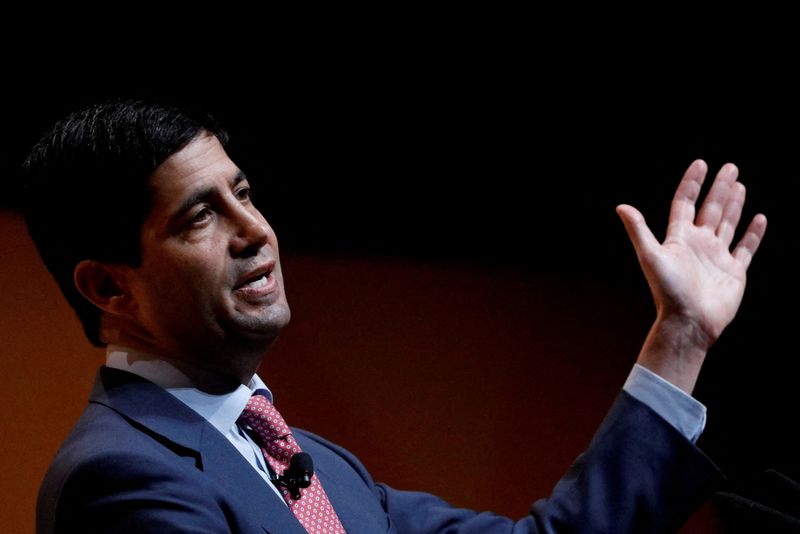
Kevin Warsh, nominated to lead the Federal Reserve, faces significant obstacles in pursuing his goal of shrinking the central bank’s balance sheet, according to financial analysts and economists. The nominee’s vision for a smaller Fed footprint in financial markets may prove impractical under current monetary policy frameworks and banking regulations. Warsh was tapped by the Trump administration in late January to succeed current Fed Chair Jerome Powell when his leadership term ends in May.
The challenge stems from the system the Fed now uses to achieve its monetary policy goals, which depends on banks holding large amounts of reserves. As the Fed balance sheet currently stands at $6.7 trillion, down from its 2022 peak of $9 trillion, any further significant reduction would require fundamental changes to both regulatory frameworks and the central bank’s operational toolkit.
Why a Smaller Federal Reserve Balance Sheet Remains Difficult
The level of liquidity in the financial system and the tools the central bank uses to manage it ultimately limit how far Fed holdings can be contracted while maintaining control over money market rates. According to analysts at BMO Capital Markets, much smaller holdings may not be feasible unless there are regulatory reforms that reduce banks’ demand for reserves, a process that will take quarters, not months, to unfold.
Additionally, economists Stephen Cecchetti of Brandeis University and Kermit Schoenholtz of New York University noted in a February 8 blog post that shrinking the balance sheet significantly would expose short-term markets to substantial volatility risk. They acknowledged concerns that a large central bank balance sheet facilitates government financing and interferes with financial markets, but emphasized that current rules and rate control tools make dramatic reductions problematic.
The Evolution of Fed Holdings
Beginning during the financial crisis nearly two decades ago and again when the COVID-19 pandemic struck in 2020, the Fed used aggressive buying of Treasury and mortgage bonds to calm troubled markets and provide stimulus. However, in the two major periods of Fed balance sheet contraction, the central bank has never come close to returning to pre-expansion levels.
The Fed’s most recent effort, known as quantitative tightening or QT, began in 2022 and aimed to remove excess liquidity from the financial system. That process reached its limit late last year when money market rates started to rise and financial firms were compelled to borrow directly from the Fed to manage liquidity needs.
Warsh’s Criticisms and Policy Vision
Warsh, who formerly served as a Fed governor from 2006 to 2011, has been a staunch critic of how the central bank uses its holdings of bonds and cash as a policy tool. He believes large Fed holdings distort financial markets and favor Wall Street interests over those of Main Street, according to his public statements.
Meanwhile, the prospective Fed leader has argued for further contraction in the Fed’s balance sheet to deploy liquidity to the economy as a whole. He has suggested this could allow the Fed to set its interest rate target lower than it would otherwise be.
Technical and Regulatory Barriers
Morgan Stanley analysts said on February 6 that rule changes could diminish banks’ desire for liquidity, but warned that lower liquidity buffers could increase financial stability risks. In contrast, J.P. Morgan economists Jay Barry and Michael Feroli told clients that enhancing how the Fed provides on-demand loans to financial firms might give banks confidence to hold less cash on hand, though they do not think it is likely the Fed can restart QT.
Breaking through market constraints would require some combination of a change in how the Fed manages money market rates and regulatory changes governing banks’ appetite for reserves, most Fed watchers agree. Some analysts said tighter coordination between the Treasury and the Fed may also give the central bank some space for smaller holdings.
Analysts at Evercore ISI said in a Tuesday report that they believe Warsh will not push for a return to pre-financial crisis monetary policy frameworks, when market liquidity was scarce and the central bank managed interest rates with very regular interventions. The firm’s assessment suggests that financial realities will ultimately temper any major policy shifts, though the path forward remains uncertain as Warsh awaits confirmation.