





Ford Motor Company faces two significant challenges that investors should monitor closely, despite the automaker’s attractive dividend yield and value proposition. The company recorded a staggering 153 recalls in 2025 spanning approximately 13 million vehicles, while its electric vehicle division continues to hemorrhage billions of dollars annually. These Ford stock challenges come even as the company trades at a price-to-earnings ratio of only 11 and offers a dividend yield approaching 4.5 percent.
The recall problem represents a persistent headache for the Detroit-based manufacturer, according to industry observers. Ford has led the automotive sector in recalls for multiple consecutive years, establishing an unwelcome record that exceeds the 89 recalls documented in 2024.
Warranty Costs Hit Ford Stock Performance
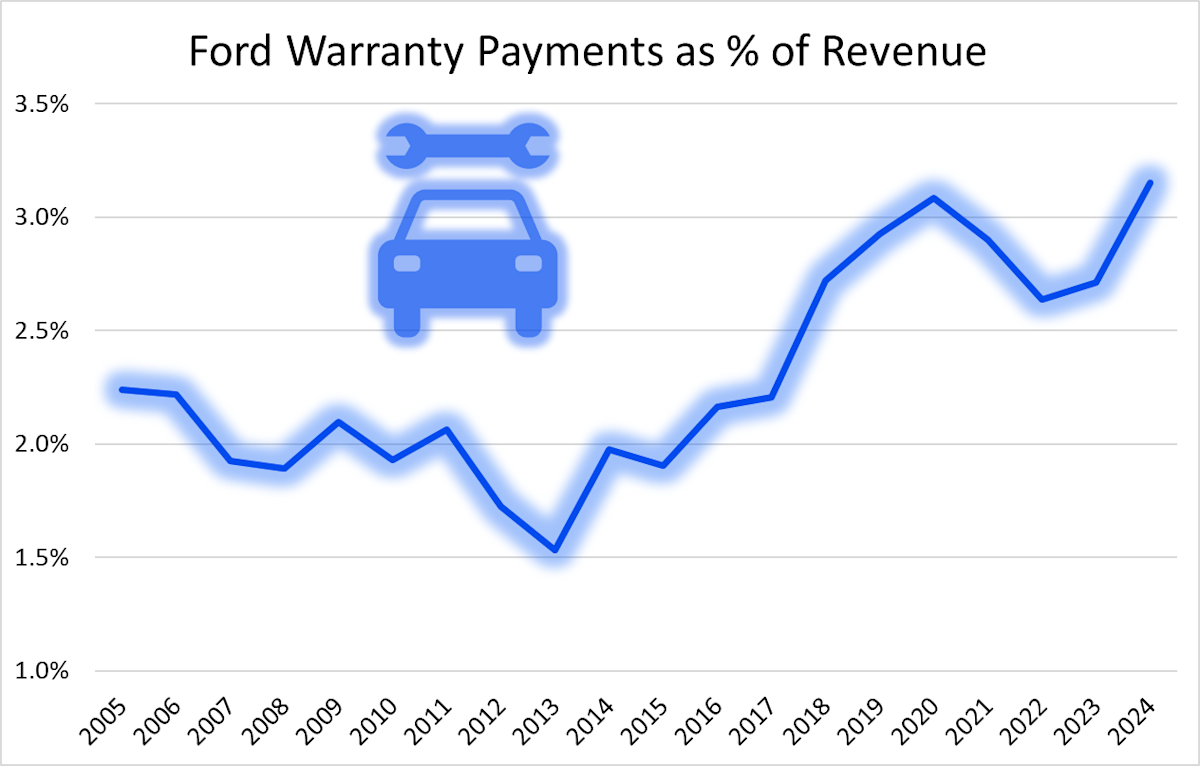
The financial impact of quality issues has proven substantial for shareholders. During the second quarter of 2024, Ford’s warranty costs surged by $800 million, causing the automaker to miss Wall Street estimates, according to company filings. Additionally, warranty payments as a percentage of revenue have trended upward over recent years, placing pressure on profit margins.
Beyond direct financial consequences, the recall frequency damages Ford’s brand image and complicates customer conquest efforts. Attracting buyers from competing brands represents one of the most difficult and expensive strategies in the automotive industry, where customer loyalty traditionally runs deep. However, CEO Jim Farley has made quality improvement a central focus, though the company notes that most issues stem from older vehicles in the global fleet.
Electric Vehicle Losses Mount
Meanwhile, Ford’s Model-e division responsible for electric vehicles lost over $5 billion in 2024 alone. The losses reflect broader industry miscalculations about EV adoption rates in the United States market, which lagged behind the rapid growth seen in Europe and China. Automakers across the sector touted multibillion-dollar investments in electrification, battery development, and infrastructure buildout, but American consumer demand failed to materialize as quickly as anticipated.
In contrast to the grim short-term picture, Ford has outlined a strategic pivot designed to stem EV losses. The company took a $19.5 billion special charge to refocus its strategy away from full-electric vehicles until profitability improves, shifting emphasis toward hybrid models that sometimes deliver higher margins than gasoline-powered counterparts.
Affordable Electric Pickup Targets Profitability
The automaker plans to launch a more affordable midsize electric pickup in 2027 with a price tag around $30,000, according to company announcements. This vehicle will utilize assembly line innovations and a new low-cost Universal EV Platform designed to achieve profitability early in its lifecycle, marking a departure from current money-losing EV operations.
Ford maintains strengths that continue attracting investor interest despite these challenges. The company’s highly profitable full-size trucks and SUVs generate substantial cash flow, while its Ford Pro commercial business produces recurring revenue streams. Additionally, some analysts see long-term potential through artificial intelligence applications and autonomous vehicle technology development.
The company’s balance sheet remains solid, providing financial flexibility to address operational challenges. However, the dual burden of escalating recall costs and electric vehicle division losses represents a significant drag on overall performance and shareholder returns in the near term.
Investors will likely watch for signs of improvement in both problem areas before gaining confidence in Ford’s long-term trajectory. The success of the 2027 midsize electric pickup launch and any reduction in recall frequency will serve as key indicators of management’s ability to execute its turnaround strategy, though specific timelines for measurable progress remain uncertain.