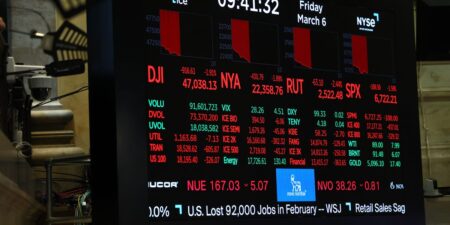






JPMorgan analysts have issued a stark warning that an extended conflict with Iran could push the S&P 500 into correction territory, marking a significant shift in the bank’s market outlook. The trading desk announced a tactically bearish stance, citing investor complacency despite surging volatility and escalating geopolitical tensions in the Middle East.
According to the bank’s analysis, options pricing suggests the S&P 500 could decline an additional 2.9% this week, compounding losses from the previous week. JPMorgan analysts project the benchmark index could fall to 6,720, representing a 10% correction from its recent peak.
Oil Infrastructure Attacks Fuel Market Concerns
The escalation has intensified following attacks on oil infrastructure on both sides of the conflict, according to JPMorgan’s commodities trading desk. The analysts noted that such attacks set a concerning precedent and believe the products rally observed last week represents only the beginning of broader commodity market disruptions.
Additionally, the bank warned that each day of potential blockage through strategic shipping lanes creates exponentially larger supply chain problems. The analysts indicated that declining production in the region is rapidly approaching levels historically associated with oil prices reaching $120 per barrel.
However, JPMorgan’s team provided historical context, highlighting that oil prices required nearly five months to fall below $100 from their peak of approximately $125 following Russia’s invasion of Ukraine in 2022. The analysts emphasized that only a definitive resolution to the current conflict would end their bearish tactical stance on equities.
Positioning Signals Suggest Market Vulnerability
The bank’s analysis reveals that investor positioning indicates market participants are not adequately prepared for additional risks despite mounting uncertainties. This complacency, combined with elevated volatility, creates conditions favorable for further S&P 500 declines, according to the trading desk.
Meanwhile, the connection between oil prices and stock market performance remains critical to near-term outlooks. Sustained energy price increases could pressure corporate margins and consumer spending, potentially undermining economic growth projections that have supported equity valuations.
Morgan Stanley Maintains Cautious Optimism
In contrast to JPMorgan’s bearish turn, Morgan Stanley’s chief investment officer Mike Wilson stated the firm maintains its bullish stance on stocks over the next six to twelve months despite recent headline risks. Wilson characterized the market as experiencing a rolling correction since October, with returns remaining relatively flat despite strong corporate earnings.
According to Morgan Stanley’s analysis, the market appears closer to concluding its rolling correction period. However, the firm acknowledged that sustained oil price increases represent the primary factor that could complicate this outlook, noting that oil remaining above $100 for an extended period would potentially derail their bull case for equities.
Nevertheless, Wilson advised investors to view near-term weakness as potential entry points for cyclical sectors positioned for gains, including financials, discretionary goods, and industrials. This recommendation suggests the firm believes fundamental economic conditions remain supportive despite geopolitical turbulence.
Market participants will closely monitor developments in the Middle East conflict and oil price movements in coming weeks to assess whether JPMorgan’s correction scenario materializes or if Morgan Stanley’s more optimistic outlook prevails. The divergence in Wall Street analyst opinions underscores the elevated uncertainty facing investors navigating current market conditions.