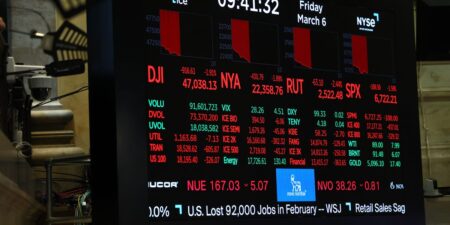






Substack has emerged as a powerful platform for retail investors seeking market insights, with recent events demonstrating its growing influence on financial markets. A report published on Substack by Citrini Research last month sent shockwaves through the market, helping to shave 800 points off the Dow Jones Industrial Average. The incident has highlighted how Substack is transforming access to market research, positioning itself as a democratized alternative to expensive professional tools like the Bloomberg Terminal.
The platform has attracted prominent investors including Michael Burry and Ray Dalio, who use it to share their market views directly with retail traders. Unlike traditional research portals that require costly subscriptions, Substack provides free or low-cost access to investing analysis and commentary from both industry professionals and lesser-known research firms.
How Substack Is Democratizing Market Research
According to Amrita Bhasin, a retail trader in the e-commerce industry, Substack offers unique value through its informal approach. She told Business Insider that the platform often features retail traders or industry operators who provide authentic insights in a stream-of-consciousness style rather than heavily edited institutional content. This authenticity resonates with individual investors seeking perspectives beyond traditional Wall Street research.
Ray Tariq, an entrepreneur from Melbourne, Australia, emphasized that Substack’s power lies in shortening the distance between retail and institutional thinking. He noted that well-timed posts can move market sentiment quickly, especially when shared across social media platforms like X and trading chat groups. Additionally, Tariq recalled how detailed market research from finance professionals was reserved for those who could afford expensive subscriptions just a decade ago.
Industry Leaders Embrace the Platform
Michael Burry, famous for predicting the 2008 financial crisis, has become a notable Substack presence after years of fleeting social media appearances. The investor, who previously joined and deleted his X account within the same day, now posts extensive analyses on stocks that interest him. His shift to Substack reflects the platform’s appeal for professionals seeking more control over their content distribution.
Steven Wang, CEO of copytrading platform Dub, sees this trend as part of a fundamental shift in market research accessibility. He told Business Insider that the democratization of information and talent is extending beyond the walls of Wall Street. However, Wang also acknowledged potential risks for traders who might not fully understand complex strategies discussed in Substack posts, such as short selling.
Concerns About Market Impact and Information Quality
Despite the benefits of democratized market research, some finance professionals urge caution. James Sixsmith, CEO of prop trading firm Take Profit Trader, pointed out that Substack content is often accepted as automatic truth by retail investors. He referenced the Citrini report, describing it as essentially a science fiction article exploring one possibility that went viral after being shared on X.
Meanwhile, the rapid spread of information from Substack to social media creates new market dynamics. Posts can influence trading decisions within hours of publication, potentially creating volatility based on speculative analysis. In contrast to traditional research reports that undergo extensive vetting, Substack content varies widely in quality and rigor.
The Future of Retail Trading Platforms
Wang suggested that Substack could expand beyond idea generation to include execution tools and portfolio management features. This would represent a logical next step in transforming the platform from a content publisher to a comprehensive trading resource. Such developments could further bridge the gap between retail and institutional investors.
The evolution of how Substack integrates with retail trading platforms and whether it develops additional educational or execution features remains to be seen. Platform executives have not confirmed any specific plans for enhanced trading functionality or risk education tools.