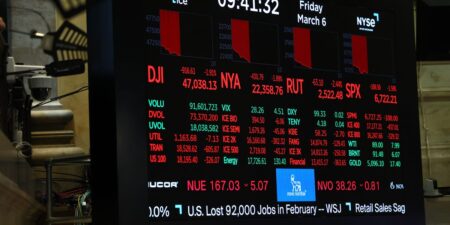






Investors endured another challenging week as major stock indexes tumbled following disappointing employment data, but Jefferies analysts say a stock market rebound may be imminent. The February jobs report released Friday showed the US economy lost 92,000 jobs, significantly missing economists’ expectations for a gain of approximately 50,000, according to the Bureau of Labor Statistics. This marks the latest setback in a difficult year for investors grappling with AI disruption, tariff uncertainty, and surging oil prices linked to US-Iran tensions.
Despite mounting concerns, Michael Toomey, a managing director for Jefferies’ equities trading team, told clients in a Friday email that markets are poised to rally. He described the recent period as “the most painful week in a long time for performance” while noting that various stress indicators suggest the market is bottoming.
Technical Indicators Point to Stock Market Rebound
Toomey outlined several technical factors supporting his optimistic outlook. According to the analyst, crude oil has reached its second-most overbought levels ever based on relative strength index measurements, with the only higher reading occurring during the 1990 Gulf War across 10,583 trading days of data. Given the inverse correlation between oil and equities, stabilizing crude prices should support the stock market rebound, he explained.
However, this technical analysis doesn’t account for ongoing geopolitical developments. The murky outlook includes potential consumer slowdown risks if labor market deterioration continues, alongside inflation concerns if the Iran conflict sustains elevated oil prices.
Fear Indicators Reach Extreme Levels
Near-term VIX contracts have surged above longer-dated contracts, signaling extraordinary investor concern about immediate risks. Toomey noted this represents the highest inversion since tariff fears last April, conditions that historically precede buying opportunities. Additionally, CNN’s Fear and Greed Index shows elevated pessimism levels, another contrarian indicator suggesting upward movement ahead.
Meanwhile, implied correlation among S&P 500 stocks has risen considerably, indicating investors are selling indiscriminately as panic intensifies. Such behavior typically marks periods of extreme stress that often precede market reversals, according to Jefferies’ analysis.
Trading Patterns Signal Market Stress
Long-short momentum indexes began normalizing Friday morning after heavily favoring short positions in recent days, potentially indicating waning pessimism. Furthermore, ETF shares comprised 42% of Friday’s trading volume, up from the typical low-30s percentage and well above normal levels.
This elevated ETF trading reflects exceptional market stress, Toomey said, adding he cannot recall ETF volumes remaining this high for such an extended period. The shift away from individual stock trading demonstrates heightened investor fear.
In contrast to the bearish sentiment, Jefferies’ technical framework suggests these extreme readings historically correlate with market bottoms. The firm’s analysis focuses primarily on sentiment and technical indicators rather than fundamental economic factors, which remain challenging given employment weakness and geopolitical risks.
Market participants will likely monitor upcoming economic data releases and geopolitical developments for confirmation of whether Jefferies’ stock market rebound thesis materializes. The timing and magnitude of any potential rally remain uncertain, particularly if labor market conditions continue deteriorating or oil prices sustain elevated levels.