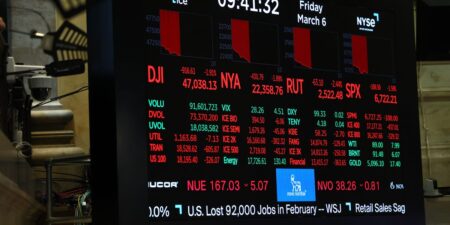





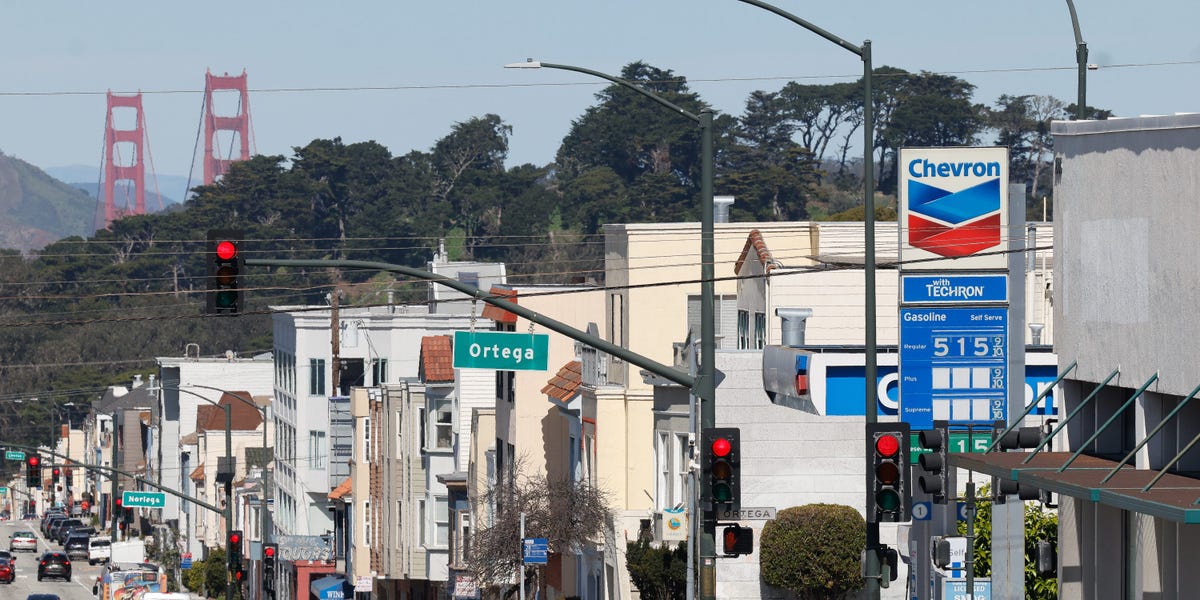
Stagflation concerns have resurfaced on Wall Street this week as oil prices surged amid escalating conflict in Iran, but a prominent economist is dismissing these fears. David Rosenberg, president of Rosenberg Research, argues that while oil prices may spike temporarily, the US economy is more likely to experience plummeting inflation by year-end rather than the troublesome combination of high inflation and stagnant growth known as stagflation.
The renewed stagflation anxiety emerged as Brent crude soared 9% to top $92.80 per barrel on Friday, according to market data. West Texas Intermediate crude climbed even more dramatically, rising over 13% to exceed $91.31 per barrel, marking its highest level since September 2023.
Why Stagflation Fears May Be Overblown
Rosenberg told Business Insider that higher oil prices will likely trigger a cost-squeeze phenomenon, where elevated prices cause consumers to reduce spending. This pullback in demand will ultimately send prices in the opposite direction, he explained. “I think we’re going to get inflation running up in the next few months and it’s going to come crashing down by the end of the year,” Rosenberg said.
The economist believes the aggregate hit to consumer demand will outweigh any short-term inflationary impact from energy prices. “This shock to demand that we’re seeing right now is going to make inflation come down even more by the end of the year than if we hadn’t had it,” he added.
Economic Indicators Point to Cooling Inflation
Several key metrics support Rosenberg’s outlook for declining price pressures. The M2 money supply, a measure of money stock in the economy that influences inflation, has stagnated at approximately 4% growth for the past year, according to Federal Reserve data. Additionally, wage growth adjusted for productivity is expanding at roughly a 1% annual pace, about half the rate from a year ago.
Meanwhile, real GDP growth has decelerated significantly. The economy expanded at an annualized 1.4% pace during the fourth quarter, according to the Bureau of Economic Analysis, representing a substantial slowdown from recent years.
Historical Precedents Support Deflationary Outlook
However counterintuitive it may seem amid current market turmoil, historical patterns demonstrate that inflation can plummet rapidly following oil price spikes. Rosenberg pointed to Russia’s invasion of Ukraine, which sent headline inflation to approximately 9% in summer 2022 before quickly cooling as consumers pulled back and the Federal Reserve raised interest rates.
Similarly, when oil prices spiked to around $150 per barrel during summer 2008, headline inflation dropped to 2.6% in the third quarter from the prior quarter’s 7.9% growth, according to Bureau of Labor Statistics data. In contrast, the oil shocks of the 1970s led to persistent stagflation, though economic conditions today differ substantially from that era.
Fed Stance Reinforces Disinflationary Pressure
The Federal Reserve has signaled its intention to maintain steady interest rates to keep inflation expectations anchored. Despite the recent crude price surge, markets are pricing in just two or three rate cuts by year-end, according to the CME FedWatch tool. This monetary policy stance supports the case for continued disinflationary pressure rather than stagflation.
Rosenberg emphasized that the massive cost-push squeeze on real incomes and purchasing power will cause disinflation or deflation in other parts of the economy. “Those are the fundamentals and everything else, including the oil price, is just background noise,” Rosenberg said.
Market participants will continue monitoring inflation data and oil price movements in coming months to determine whether Rosenberg’s forecast proves accurate. The trajectory of consumer spending and Fed policy decisions will be critical factors, though the timing of any significant inflation decline remains uncertain.