



Oil prices surged to multi-year highs this week as escalating tensions with Iran fueled concerns about supply disruptions and potential economic fallout. Brent crude, the international benchmark, climbed more than 6% on Friday to top $90 a barrel, reaching its highest level since 2024, while West Texas Intermediate crude jumped 7% to $87 a barrel, according to market data.
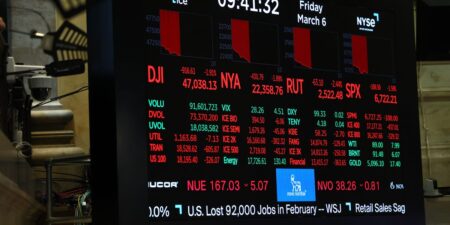
The sharp rally in crude prices followed Iran’s recent attack on an oil tanker and comments from former President Donald Trump suggesting the conflict could continue. April contracts for West Texas Intermediate crude reached their highest level since October 2023, prompting widespread selling in equity markets as investors assessed the implications for economic growth.
Oil Price Shock Comparisons to 1970s Stagflation
The rapid increase in oil prices has drawn comparisons to the supply shocks of the 1970s, when soaring crude led to stagflation—a combination of high inflation and sluggish economic growth. However, market analysts are monitoring specific price thresholds that could signal more severe consequences for the U.S. economy. While many professionals expect the price spike to be temporary, several key levels have emerged as critical indicators.
Additionally, rising energy costs represent a crucial input for economic activity, influencing everything from transportation expenses to manufacturing costs. The surge has already triggered significant volatility across financial markets, with investors dumping stocks throughout the week.
Critical Price Thresholds and Economic Impact
According to Nic Puckrin, a lead market analyst at Coin Bureau, oil prices breaking “meaningfully” above $80 per barrel and staying elevated for several weeks would begin to lift the inflation outlook. Meanwhile, if crude surges above $90 and remains there as energy infrastructure disruption intensifies, “this could quickly become a longer-term structural shift,” Puckrin wrote in a note this week.
A rise to $100 per barrel—representing a 12% increase from Friday’s Brent trading level—would constitute a true oil price shock, according to José Torres, a senior economist at Interactive Brokers. He told Business Insider that such a scenario would likely produce an inflationary response similar to the aftermath of Russia’s invasion of Ukraine, when U.S. consumer prices grew as fast as 9% year-over-year.
In that scenario, Torres projected inflation could climb back to 3%, derailing expectations for Federal Reserve rate cuts while increasing stagflation risks. Mike Wilson, chief investment officer at Morgan Stanley, also identified $100 per barrel as the threshold that could undermine his bullish outlook for stocks, citing his team’s analysis of historical stock market performance following oil price spikes.
Furthermore, oil reaching $100 would push year-over-year gains into the 75%-100% range, a territory that has historically led to stock underperformance. “The bear case scenario for stocks related to this past weekend’s events in Iran and across the Middle East would be if oil prices were to rise sharply/persistently, thereby posing a risk to the duration of the business cycle,” Wilson stated in a client note.
Recession Triggers at Extreme Levels
At $120 per barrel—a 34% increase from current Brent levels—oil prices could trigger a U.S. recession, according to Bruce Richards, CEO of Marathon Asset Management. Speaking at the Bloomberg Invest conference Wednesday, Richards warned that “$120 for Brent, you’re at zero growth. That’s the trigger for a recession,” adding that he believes markets share this view even if few have publicly acknowledged it.
Nobel economist Paul Krugman similarly warned that oil prices reaching $120 could raise headline inflation by approximately 1 percentage point and elevate recession risks. In contrast to some forecasts, Krugman suggested he wasn’t expecting oil price changes alone to spark a recession or runaway inflation, though he acknowledged the risks would be skewed toward the downside given other economic pressures including a weaker job market.
“There are many stresses on our economy, and this could be the straw that breaks the camel’s back—a straw that becomes heavier the longer the war goes on,” Krugman wrote in a Substack post this week. The combination of elevated crude prices with existing economic headwinds could amplify negative outcomes beyond what oil price movements might suggest in isolation.
Market participants will continue monitoring developments in the Middle East conflict and any signs of supply disruption that could push prices toward these critical thresholds. The timing and duration of elevated oil prices remain uncertain, making it difficult to predict whether temporary spikes will evolve into sustained price increases with broader economic consequences.