




Market turmoil this week stems from a single overwhelming concern: spiraling inflation. Following military strikes by the US and Israel on Iran over the weekend, investors fear that prolonged conflict could push oil prices higher and scramble the inflation outlook at a critical time when President Donald Trump has prioritized affordability and economic growth appears fragile.
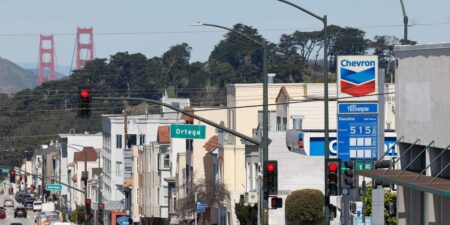
Oil prices, a key driver of inflation, have surged since the strikes, with Brent crude climbing to $84 per barrel on Tuesday, its highest level in more than a year. According to José Torres, a senior economist at Interactive Brokers, the significance of oil means that any increase immediately translates into rising inflation across the economy.
Consumer prices had been edging lower in recent months, but discussion of an oil price shock similar to the 1970s has begun circulating across Wall Street. These concerns intensified after wholesale prices, a forward-looking inflation indicator, came in much hotter than expected last Friday, according to market reports.
Additionally, inflation fears are evident in the sharp spike in Treasury yields, which reflect investors dumping US bonds in anticipation of hotter inflation and fewer rate cuts. The 10-year US Treasury yield surged to 4.1% on Tuesday, Torres noted.
Rising Inflation Expectations Across Markets
Oil price spikes function as macro transmission mechanisms that ripple through inflation, not merely energy stories, according to Mark Malek, the CIO of Siebert Financial. He warned that the longer supply routes remain impaired, the greater the structural inflation risk becomes.
Should crude oil sustain its current price spike, Malek expects consumer inflation to rise by approximately 0.5 percentage points this year. Meanwhile, economists at SocGen indicated that if oil prices reach $90 per barrel and remain there for at least three months, global inflation could increase as much as 1 percentage point.
Challenges to Trump’s Affordability Agenda
Inflation fears arrive at an inopportune moment for Trump, who has made affordability central to his agenda as midterm elections approach. In recent months, the president has proposed various measures including a 50-year mortgage option, credit card rate caps, and suggestions that the Federal Reserve slash interest rates immediately.
However, during his State of the Union address, Trump suggested affordability had improved, claiming at one point that prices were “plummeting downward.” Among market experts, that characterization seems far from accurate given current trends.
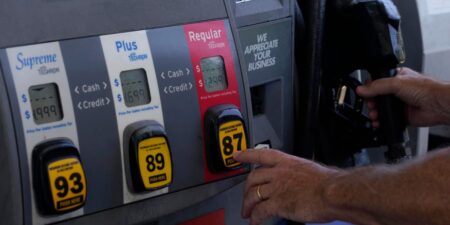
Borrowing costs have climbed alongside the Middle East conflict. The average 30-year mortgage rate rose 13 basis points in the week through Monday to 6.12%, according to Mortgage News Daily data. The rate had briefly dipped below 6% last week to its lowest level since 2022.
Stagflation Risks Increase
Fears of hotter inflation have dimmed the economic outlook, with more forecasters warning of increased stagflation risk if higher prices dent economic growth. This scenario, defined by runaway price growth and a sluggish economy, is often considered a worst-case outcome for financial markets.
Economic growth has already disappointed recently. The US ended 2025 with real GDP growing just 1.4% year-over-year, falling short of the expected 2.8% increase, according to official data.
Malek indicated he believes stagflation risks have increased, noting that even a small change in inflation could dent growth given how many Americans remain under pressure from cumulative price increases over recent years. David Russell, global head of market strategy at TradeStation, also warned of potential for a “stagflationary shock” with “spiraling prices.”
The conflict represents a “Gordian knot of his own making” for Trump, Grace Fan, a managing director at TS Lombard, wrote Tuesday, pointing to the approaching midterm elections. Paul Hickey, cofounder of Bespoke Investment Group, suggested Trump might adopt a softer geopolitical stance if inflation fears continue escalating.
When asked about market reaction to the Iran conflict, the White House directed inquiries to Trump’s Tuesday comments to reporters. The president acknowledged potential near-term oil price increases but predicted prices would drop once the conflict ends, though he provided no timeline for resolution.