





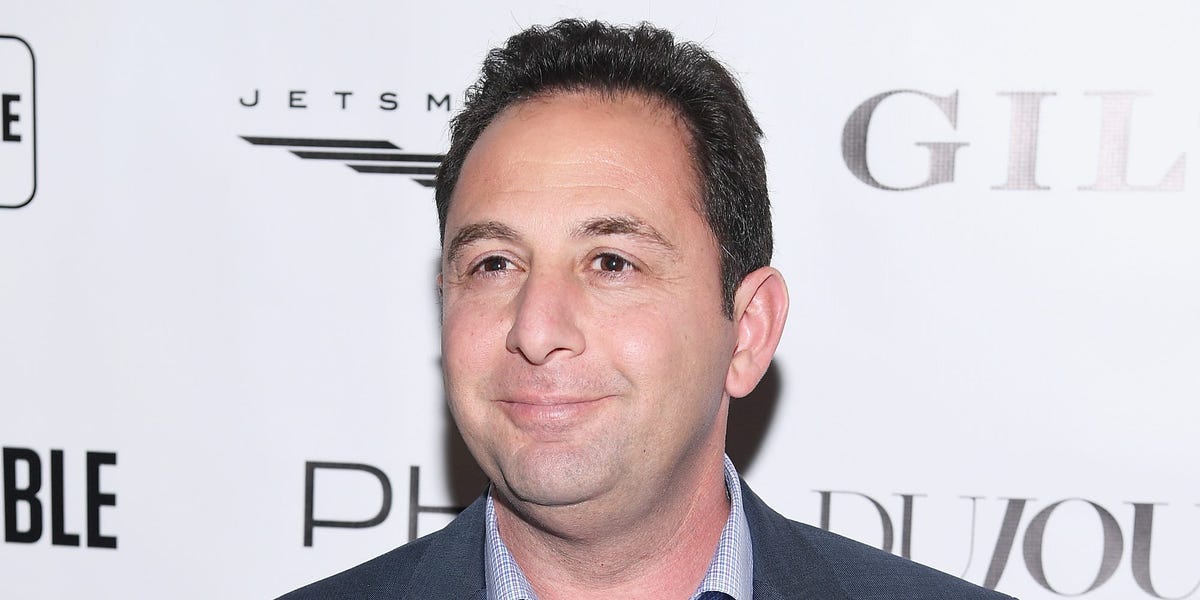
Peter Mallouk, the billionaire CEO of wealth management firm Creative Planning, is urging investors to diversify their portfolios more than ever as artificial intelligence disrupts financial markets in unprecedented ways. According to Mallouk, AI represents a fundamentally different technological shift compared to previous innovations, and its transformational impact requires immediate portfolio adjustments to navigate increased market volatility.
Mallouk told Business Insider that AI is far more impactful than past technological advancements, including the internet and productivity software. He emphasized that AI removes up to 95% of work in certain roles, making it completely transformative rather than simply improving efficiency like earlier innovations.
AI Market Volatility Drives Investment Strategy Shift
The realization of AI’s disruptive power has recently reverberated through financial markets, with various stock sectors experiencing significant turbulence. A viral report from Citrini Research drove a market sell-off earlier this month, highlighting growing investor concerns about artificial intelligence’s unpredictable impacts.
Additionally, the AI revolution has produced unexpected winners in the stock market, with energy and consumer goods sectors outperforming technology stocks in some instances. This counterintuitive outcome underscores the difficulty investors face in predicting which sectors will benefit most from AI advancements.
Given this heightened volatility, Mallouk revealed that his approximately 3,400 clients, each worth at least $25 million, are spreading their investments across more asset classes than before. The wealth manager emphasized that smart money is more diversified than ever in response to AI-driven market disruptions catching investors off guard.
Portfolio Diversification in the AI Era
While diversification represents fairly basic investment advice, Mallouk stressed that it has become especially critical in today’s environment. However, he noted that proper diversification looks different now than it did in previous market cycles.
The traditional 60/40 portfolio allocation between stocks and bonds has long been the standard approach for balanced investing. In contrast, Mallouk recommends a broader and less conservative strategy that better positions investors for AI-related market uncertainty.
Specifically, the wealth manager advises investors to increase equity exposure beyond the traditional 60% allocation. This should include both non-US stocks and representation across all US market sectors, accessible through funds like the Vanguard Total World Stock ETF and the Schwab U.S. Broad Market ETF.
Alternative Asset Allocation
Meanwhile, Mallouk suggests maintaining minority positions outside of equities in fixed income and alternative assets. These alternatives include real estate, gold, private equity, and private credit, which can be accessed through various exchange-traded funds including the Vanguard Total Bond Market ETF, iShares Global REIT ETF, SPDR Gold Shares ETF, Invesco Global Listed Private Equity ETF, and BondBloxx Private Credit CLO ETF.
The investment strategy emphasizes long-term thinking and strategic asset allocation rather than frequent portfolio adjustments. Mallouk cautioned investors against the urge to fine-tune their holdings too aggressively in response to market movements.
According to the wealth manager, investors who attempt to rotate between different assets too frequently risk getting burned by mistiming market shifts. Instead, he recommends spreading investments across multiple asset classes and maintaining those positions over time.
As AI continues reshaping the investment landscape, market participants remain focused on identifying sustainable strategies that can withstand ongoing technological disruption. The full extent of artificial intelligence’s impact on various market sectors remains uncertain, with further volatility expected as companies and investors adjust to the new reality.