





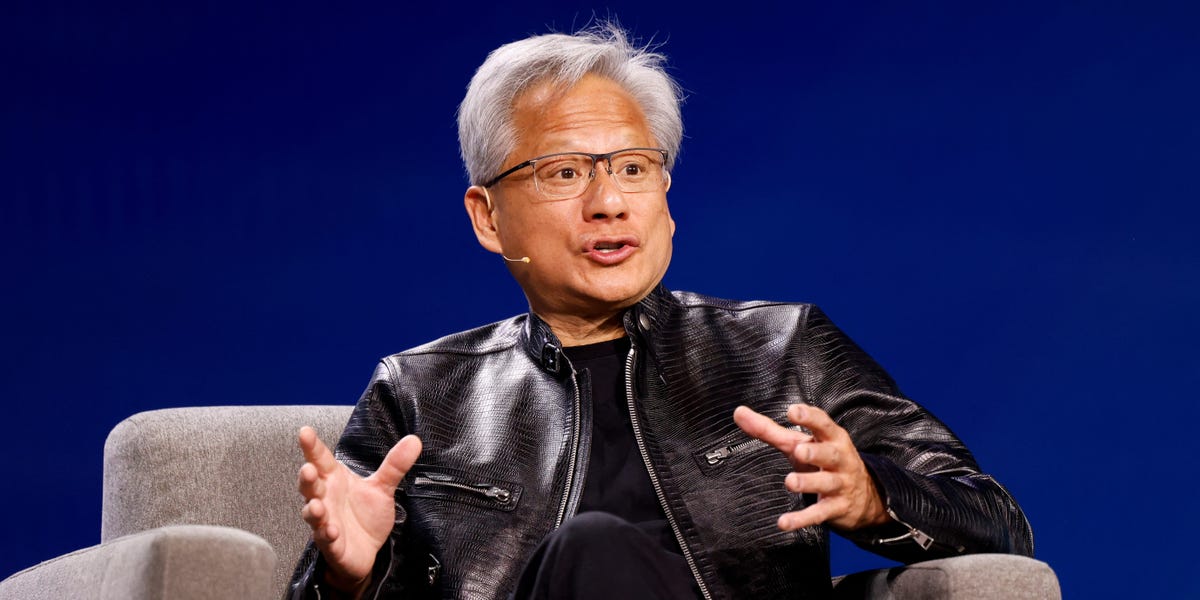
Nvidia CEO Jensen Huang has pushed back against the recent market panic over artificial intelligence disruption, arguing that investors are misunderstanding how AI agents will transform the software industry. The AI scare trade has sent software stocks plummeting in recent weeks, with some companies losing more than 20% of their value as fears mount about AI’s potential to replace traditional software platforms. However, according to Huang, the market selloff represents a fundamental misreading of how agentic AI will actually be deployed across the technology sector.
Speaking on CNBC following Nvidia’s fourth-quarter earnings release on Wednesday, Huang directly challenged the prevailing market sentiment. He stated that companies currently being punished by investors are likely to introduce AI agents that run on their existing platforms rather than being displaced by the new technology. Despite Nvidia beating revenue estimates and guidance, the stock fell as much as 5% on Thursday, reflecting broader investor fatigue with AI-related narratives.
Software Companies Positioned to Integrate AI Agents
Huang pointed to specific examples to support his thesis about the AI scare trade being overblown. ServiceNow, a software producer that has dropped more than 20% over the past month, was cited as a company in prime position to bounce back. According to the Nvidia CEO, ServiceNow will implement AI agents to enhance its operations and streamline productivity rather than being replaced by AI technology.
The executive also used his own company to illustrate how AI agents will complement rather than replace existing business models. Huang revealed that Nvidia currently has 42,000 biological employees and expects to add hundreds of thousands of digital employees in the future. These AI workers will collaborate with human staff to utilize more tools and increase overall productivity across the organization.
The Future of Software Development
Additionally, Huang addressed concerns about AI eliminating human jobs in the software development sector. He made clear his vision of a future where AI agents continue writing code and creating software for companies experiencing strong demand. However, this doesn’t mean human labor will become obsolete in the industry.
In contrast to fears about workforce replacement, Huang predicted that the fundamental purpose of work will remain unchanged. He stated that companies will still need lots of software engineers, though they may not code in traditional ways. Instead, these professionals will code differently, adapting their skills to work alongside AI agents rather than being replaced by them.
Market Analysts Support Software Stock Resilience
Meanwhile, Huang isn’t alone in his optimistic outlook for software stocks despite AI disruption concerns. Deutsche Bank analysts recently shared research on Anthropic, stating that they don’t view the company’s AI technology as a replacement for current software systems. This perspective aligns with Huang’s argument that AI agents will enhance rather than eliminate existing platforms.
However, the tepid market reaction to Nvidia’s strong earnings demonstrates the depth of investor skepticism. Despite the company crushing estimates for both revenue and guidance, the stock decline on Thursday showcased how thoroughly AI fatigue has gripped financial markets. The disconnect between corporate performance and stock price movements highlights the emotional nature of the current selloff.
The technology sector continues to grapple with uncertainty about how AI disruption will ultimately reshape competitive dynamics. Whether Huang’s predictions prove accurate will depend on how successfully software companies integrate AI agents into their existing platforms over the coming quarters.