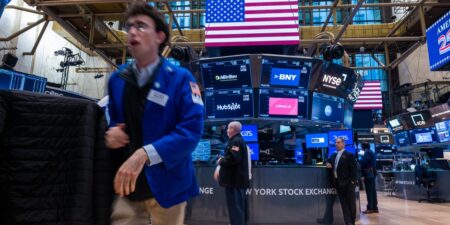





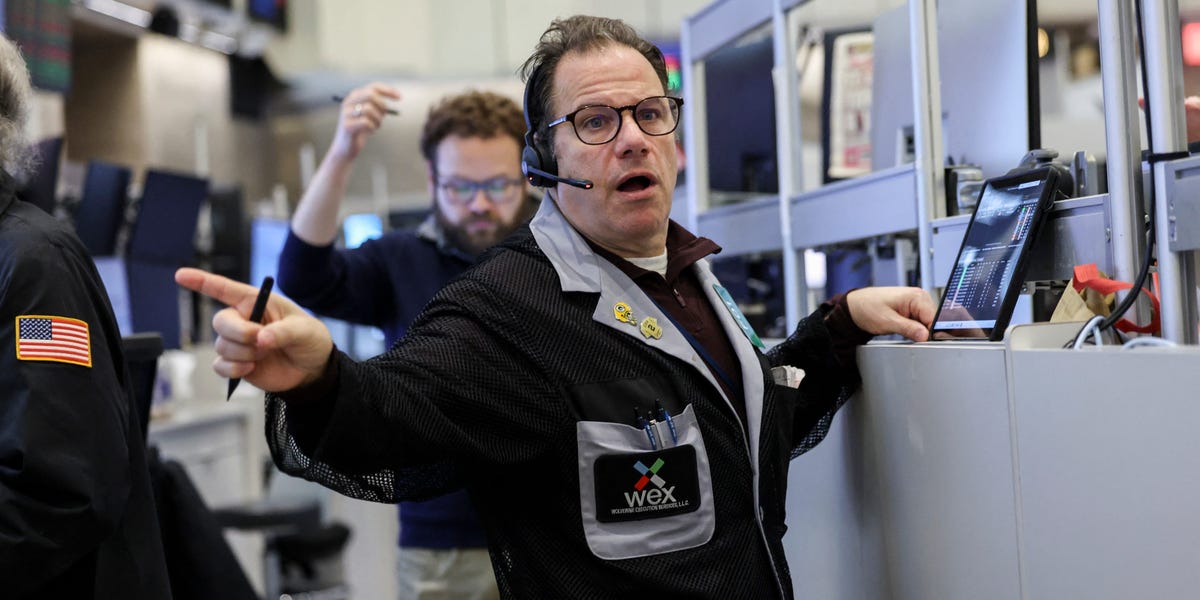
US stock markets tumbled on Monday as investors grappled with software sector fears and renewed tariff uncertainty. Major indexes dropped more than 1% amid growing concerns about AI disruption in the software industry, while President Donald Trump’s weekend announcement of higher global tariffs added to market volatility. The Dow Jones Industrial Average lost more than 800 points as selling intensified around midday trading.
The software sector selloff accelerated following a Salesforce downgrade and widespread circulation of a research note warning that the AI boom could trigger a white-collar recession. According to reports, Trump announced plans to hike global tariffs to 15% over the weekend, one day after the Supreme Court struck down most of his earlier tariff policies. The iShares Expanded Tech-Software Sector ETF, which entered bear market territory earlier this year, declined an additional 5% and is now down nearly 30% in 2026.
AI Disruption Fuels Software Sector Concerns
Market anxiety intensified after Citrini Research published a report outlining a hypothetical scenario in which AI advancement could lead to economic downturn by 2028. The research note described a potential future where automated systems create “one long daisy chain of correlated bets on white-collar productivity growth,” according to the firm. The November 2027 crash scenario presented in the report suggested that negative feedback loops could accelerate market deterioration.
Fresh AI jitters have brought corporate capital expenditure spending back into focus for investors. Peter Berezin, chief market strategist at BCA Research, told Business Insider that market sentiment largely revolves around AI concerns at this point. He emphasized that investors are questioning whether massive spending on AI data centers is justified given unclear monetization strategies at some technology companies.
Tariff Uncertainty Compounds Market Pressure
Meanwhile, trade policy developments continued to weigh on investor sentiment throughout the trading session. Joe Mazzola, head trading and derivatives strategist at Charles Schwab, wrote in a Monday note that tariff uncertainty pushed stocks to early losses and raised volatility on Wall Street. The combination of trade policy shifts and software sector weakness created a challenging environment for equity markets.
Additionally, Mark Hackett, chief markets strategist at Nationwide, attributed much of Monday’s volatility to continued skepticism over artificial intelligence and fresh tariff concerns. Hackett noted that hedge funds have aggressively moved to the sidelines, with net sales of US equities occurring at the fastest pace since last March. According to his analysis, net leverage is tracking toward the second largest monthly decline in a decade.
Technology Earnings Could Shape Near-Term Sentiment
The technology sector’s struggles come as investors await critical earnings reports from major companies this week. Nvidia and Salesforce are both scheduled to report quarterly results on Wednesday, which could provide clarity on AI-related capital spending and software demand. However, these reports will also test whether companies can demonstrate returns on substantial AI infrastructure investments.
In contrast to earlier optimism surrounding artificial intelligence, current market sentiment reflects growing doubts about the sector’s near-term prospects. The software selloff has accelerated concerns about whether AI adoption will meet elevated expectations that drove valuations higher in previous years. Investors are scrutinizing whether productivity gains from AI implementation will justify the substantial capital outlays technology companies have committed.
Investors will likely focus on technology earnings releases this week to gauge whether software sector concerns are warranted or overblown. The Nvidia and Salesforce reports on Wednesday are expected to provide crucial insights into AI spending trends and software demand, according to Charles Schwab’s Mazzola. Market participants await guidance from these companies regarding future investment plans and revenue visibility.