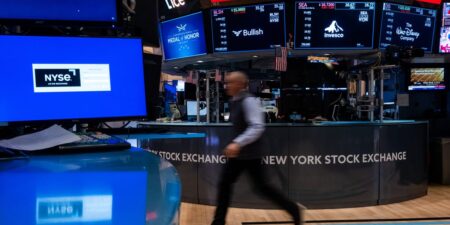





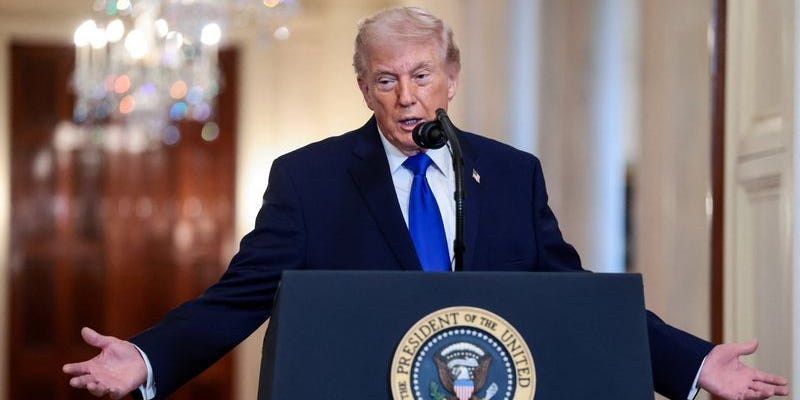
President Donald Trump is set to deliver his first official State of the Union address on Tuesday evening, with investors closely monitoring the speech for signals that could impact financial markets. While State of the Union addresses typically do not move markets significantly, the current uncertainty surrounding Trump’s tariff policies and escalating geopolitical tensions have elevated the stakes for this year’s address. According to Freedom Capital Markets chief market strategist Jay Woods, the speech could prove unpredictable given Trump’s track record of unexpected announcements.
A poll from Scripps News/Talker Research found that two-thirds of Americans view this State of the Union address as more important than previous years. Market watchers are particularly focused on three key areas that could generate volatility on Wall Street.
Tariff Policy Updates Following Supreme Court Ruling
The Supreme Court recently ruled that the majority of Trump’s tariffs are illegal, determining that the International Emergency Economic Powers Act does not justify the import duties. However, Trump responded by raising global tariffs to 15% using alternative legal frameworks to support his trade war strategy.
Additionally, legal challenges surrounding tariff policies are expected to continue, leaving investors without clear guidance on future trade policy direction. The fight over tariff rebates for companies may be entering a new phase, according to market analysts.
Any comments from Trump about his trade plans during the State of the Union address could significantly reshape Wall Street’s expectations and move stocks. Woods indicated that the speech might reveal more about Trump’s intent to continue levying tariffs despite the Supreme Court decision, which could impact market sentiment.
Iran Tensions and Oil Market Volatility
Oil prices have experienced volatility amid rising tensions between the United States and Iran. According to Woods, if Trump were to signal an escalation of potential military action against Iran during his address, it could trigger market movements.
Meanwhile, the United States has been building up its military presence in the Middle East in recent weeks. Updates from Trump regarding US involvement in Iran could add to volatility in the oil market, potentially putting pressure on a key component of inflation calculations.
Economic Affordability and Federal Reserve Implications
While potentially less market-moving than tariff announcements or military action, Trump is expected to emphasize economic issues and his commitment to making life more affordable for Americans. The Scripps News/Talker Research poll showed that almost half of Americans are most interested in what Trump says about the economy during the State of the Union address.
In contrast to earlier worst-case predictions, the US economy has shown resilience under some of Trump’s policies, though concerns persist among economists and market participants. Comments from Trump about economic conditions could influence investor perceptions regarding inflation trends and labor market strength.
Furthermore, any economic signals from the president could alter expectations for the timing of interest rate cuts by the Federal Reserve. Market participants will be parsing Trump’s remarks for clues about future economic policy direction and potential impacts on monetary policy decisions.
The financial community will be closely analyzing Trump’s State of the Union address for concrete policy details and directional guidance. However, authorities have not confirmed specific policy announcements in advance, leaving considerable uncertainty about what the president will reveal during Tuesday evening’s speech and how markets will respond in subsequent trading sessions.