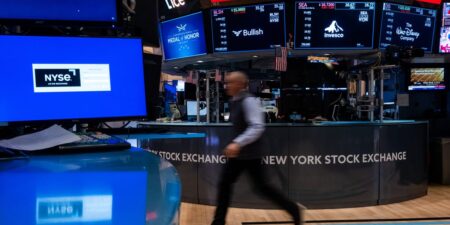






President Donald Trump’s trade war has entered a period of heightened market uncertainty following a Supreme Court decision that struck down the majority of his tariffs. The ruling triggered immediate volatility in financial markets as investors grappled with the implications of the decision and Trump’s swift response to implement alternative tariff measures. Market strategists are now advising clients on how to position their portfolios amid this evolving trade landscape.
US stocks initially rallied on Friday after the tariff ruling was announced, according to market reports. However, those gains evaporated on Monday as traders reacted to Trump’s announcement that he would hike global tariffs to 15%, escalating from an earlier proposed 10% rate. The whipsaw price action underscored the confusion surrounding the administration’s next steps on trade policy.
Ongoing Trade Uncertainty Weighs on Markets
The Supreme Court decision has not resolved the fundamental uncertainty around tariffs that has plagued investors for months. Art Hogan, chief market strategist at B. Riley Wealth Management, told Business Insider that the ruling and Trump’s quick pivot to alternative measures have failed to remove headwinds facing the market. Additionally, questions remain about how tariff refunds might be processed, adding another layer of complexity to the situation.
Market professionals are divided on whether the new 15% global tariff represents a significant shift from the previous trade policy framework. Some countries that faced higher tariffs before the ruling, including China and Brazil, may actually benefit under the revised scheme. However, the overall impact on corporate earnings and consumer prices remains difficult to predict.
Investment Strategies for Navigating Trade Volatility
Peter Berezin, chief market strategist at BCA Research, argued that trade tensions have become a secondary concern for markets. According to Berezin, the overarching focus remains on artificial intelligence investments, which continue to drive major equity indexes. He suggested that Trump is unlikely to raise tariffs beyond the recently announced levels, particularly as the administration prioritizes its affordability agenda ahead of midterm elections.
Furthermore, Trump likely recognizes that tariffs are inflationary and may be seeking to avoid additional price pressures, despite some administration officials downplaying the impact. Berezin pointed to reports that Trump was considering rolling back certain steel and aluminum tariffs, though the White House subsequently denied those claims. Meanwhile, investors are watching for any signs of policy moderation that could provide relief to markets.
Sector Rotation Opportunities
Hogan recommended that investors focus on sectors that have outperformed recently after years of lagging the broader market. Materials, industrials, and energy stocks have emerged as the best-performing sectors of the S&P 500 year-to-date, with gains of 16%, 14%, and 22% respectively. These areas may continue to benefit from economic trends independent of trade policy shifts.
In contrast, consumer-facing companies that are major importers experienced a brief rally following the Supreme Court ruling. However, Hogan cautioned against chasing these gains, noting that tariff refunds remain uncertain and would likely involve a protracted government process. Jeff Buchbinder, chief equity strategist at LPL Financial, echoed this sentiment, advising clients to fade bounces in tariff-sensitive consumer retailers.
Safe Haven Assets Gain Attention
David Morrison, senior market strategist at Trade Nation, suggested that precious metals and commodities could benefit from tariff-driven market stress. Investors typically flock to hard assets and other safe havens during periods of heightened uncertainty. Despite experiencing a historic sell-off in late January, these assets have posted strong gains so far this year, reinforcing their appeal as portfolio diversifiers.
Buchbinder noted that among tariff-sensitive sectors, homebuilders, industrials, and technology hardware companies represent better opportunities than apparel retailers and automakers. This reflects the varying degrees to which different industries rely on imported goods and their ability to pass costs to consumers. Additionally, companies with domestic manufacturing capabilities may find themselves at a competitive advantage under the new tariff structure.
The path forward for US trade policy remains unclear as legal challenges to the new tariff measures may emerge. Investors are awaiting further clarification from the administration on implementation details and potential exemptions, though no specific timeline has been announced for additional policy guidance.