





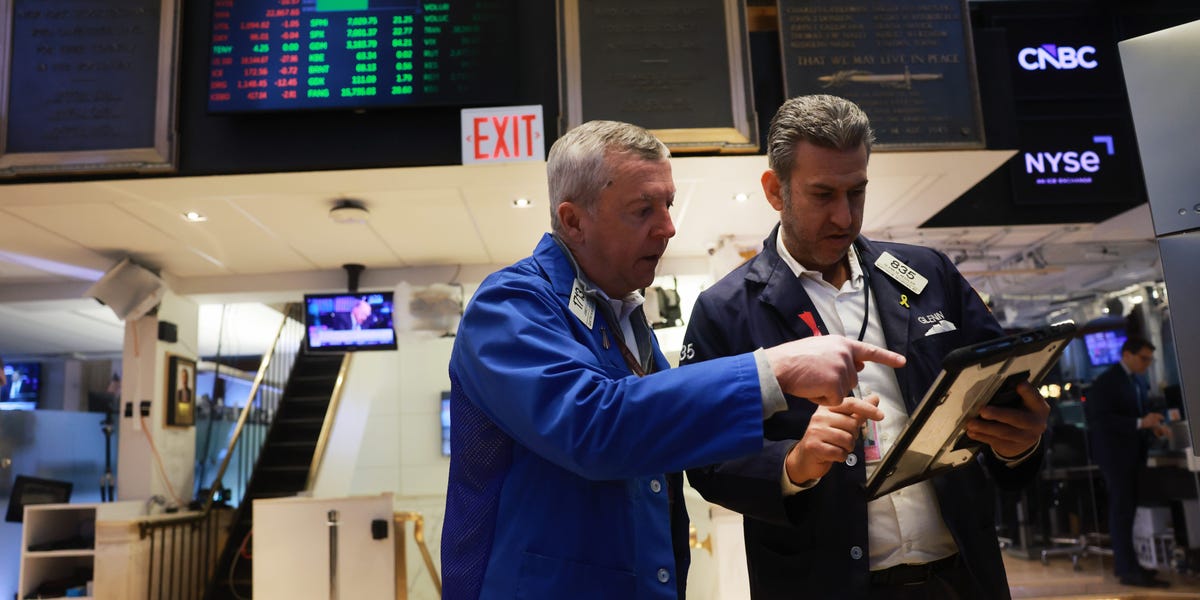
Stock markets are experiencing widespread turbulence as AI panic grips investors across multiple sectors, with fear of artificial intelligence disruption reaching unprecedented levels. The sell-off began with software companies last week and has since spread to industries ranging from wealth management to trucking, erasing trillions in market value as new AI tools emerge almost daily.
The technology-heavy Nasdaq Composite was on track to end the week 1% lower on Friday, according to market reports. Major indexes wavered following a cooler-than-expected inflation report, marking another losing week for investors grappling with uncertainty over AI’s impact on traditional business models.
Software Sector Faces Historic AI Panic Sell-Off
The initial wave of AI panic began in the software sector, which experienced its most dramatic repricing in nearly 30 years. The industry saw approximately $2 trillion in market capitalization erased within days, representing the largest non-recessionary drawdown in three decades, according to market data.
The sell-off accelerated after Anthropic unveiled new plugins for its Claude Cowork agent, sparking fears that AI could pose an existential threat to established software companies. The decline that started in legal-software stocks quickly spilled into the broader sector, with the iShares Expanded Tech-Software Sector ETF plunging 20% year-to-date and declining 1% for the week.
Brokerages and Wealth Managers Hit by AI Disruption Fears
Insurance brokers and wealth managers became the next casualties of mounting AI panic in financial markets. Insurers’ stocks took a hit on Monday, while wealth management firms including LPL Financial, Charles Schwab, and Raymond James faced heavy selling pressure a day later.
The decline followed tech firm Altruist’s announcement of a new AI tool capable of helping clients with tax planning “within minutes,” according to the company. Investors fear that AI capabilities could significantly erode margins among firms providing fiduciary services such as wealth and estate planning. Additionally, the iShares U.S. Broker-Dealers & Securities Exchanges ETF dropped 6% during the week.
Real Estate and Trucking Sectors Join AI Panic
Real estate firms began selling off on Thursday as market participants assessed how AI could disrupt client services traditionally provided by major firms. Meanwhile, the trucking sector experienced an unexpected shock from an unlikely source.
Algorhythm Holdings, a company that previously manufactured karaoke machines under the name Singing Machine, triggered a sell-off in trucking stocks after publishing a white paper about its new AI freight-scaling tool. The company claimed the technology could significantly improve logistics efficiency, sending shockwaves through the transportation sector.
However, the announcement proved profitable for Algorhythm itself, with shares spiking more than 30% to exit penny-stock territory and trade around $1.25 Friday morning. In contrast, the iShares US Transportation ETF declined 3% for the week as investors reassessed traditional logistics companies’ competitive positioning.
Market Volatility Reflects Broader Uncertainty
The rapid succession of AI announcements has forced investors to continuously reassess company valuations in real time. Each new AI tool release has prompted immediate market reactions as traders attempt to identify which businesses face disruption and which may benefit from the technology.
The constant barrage of updates and new AI capabilities has intensified concerns about how quickly artificial intelligence could transform established industries. Market participants have struggled to determine appropriate valuations for companies potentially facing margin compression or obsolescence from AI-powered competitors.
Markets remain highly sensitive to AI developments, with analysts expecting continued volatility as companies release new tools and capabilities. Investors will likely monitor upcoming earnings reports and company guidance for clearer indications of AI’s actual impact on business fundamentals, though the timeline for market stabilization remains uncertain.