




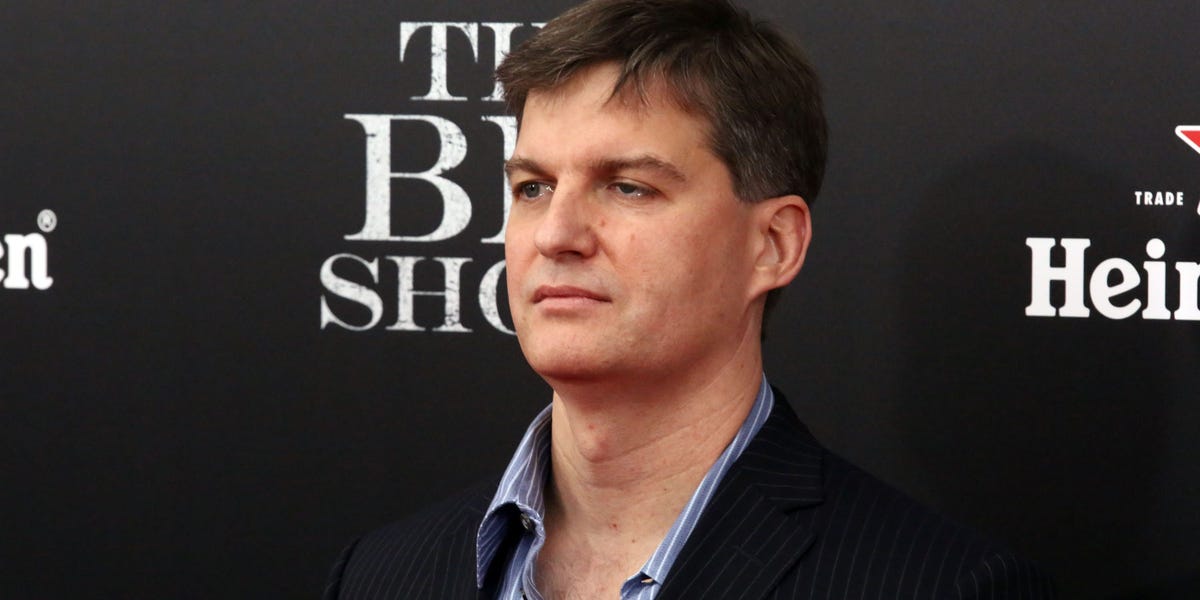
Michael Burry, the investor famous for predicting the 2008 financial crisis in “The Big Short,” has published a detailed analysis suggesting Palantir stock could be worth significantly less than its current trading price. In a Substack post released Thursday, Burry outlined several scenarios in which Palantir’s fair value ranges from as low as $46 per share to $146 per share, with his baseline calculation indicating a potential 66% decline from current levels.
The investor made clear he is not predicting a prosperous future for the artificial intelligence company. According to Burry’s analysis, Palantir could ultimately be valued at less than $100 billion, representing a roughly $200 billion drop from its current market capitalization. Burry also disclosed that while he is not actively shorting Palantir, he holds put options on the stock through his hedge fund Scion Asset Management.
Michael Burry Questions Palantir Stock Fundamentals
The renowned investor said his bearish thesis centers on Palantir’s balance sheet and financial history. Burry emphasized that his calculations are based on publicly available financial data and information he gathered from unnamed former employees. However, he acknowledged that some details could not be independently verified.
One of Burry’s primary concerns involves Palantir’s two-decade period of unprofitability before going public. According to an anecdotal report from a former staff member cited in his analysis, the company at one point had no compounding sales, meaning revenue wasn’t generating future business opportunities. This forced Palantir to continuously pursue new deals to maintain growth, Burry wrote.
High Spending and Compensation Raise Concerns
Burry highlighted several areas where Palantir has spent heavily over the years. The company invested more than $450 million in SPACs during the pandemic era, many of which subsequently lost value, according to the analysis. Additionally, Palantir accumulated approximately $3.8 billion in losses prior to its initial public offering.
CEO Alex Karp received more than $1 billion in stock options leading up to the IPO, Burry noted. The investor also cited information from an unnamed former engineer suggesting a 20/80 compensation split between top management and other employees, though he could not independently confirm this ratio. These spending patterns demonstrate the company’s tendency to “throw money around,” according to Burry’s assessment.
Accounting Practices Under Scrutiny
The investor raised questions about how Palantir categorizes certain expenses on its financial statements. Research and development spending may include items that inflate the figure, such as travel expenses, cloud hosting costs, and stock-based compensation, Burry suggested. Meanwhile, costs associated with Palantir’s forward-deployed engineers are split across multiple categories in what Burry characterized as an atypical manner.
This accounting treatment could make gross margins appear higher than they would under standards used by consulting firms like Accenture or Deloitte, according to the analysis. If Palantir followed those accounting conventions, “gross margins would collapse” and the stock would likely trade at a much lower price-to-sales multiple, Burry wrote.
Billionaire-to-Sales Ratio Signals High Expectations
In an unconventional metric, Burry calculated what he called the “B/S ratio,” measuring billionaires associated with Palantir relative to company revenue. He believes this ratio may be the highest in global stock market history, reflecting what he characterized as “egregious stock based compensation” relative to revenue generation. This metric represents extraordinarily high market expectations for the AI company’s future performance, the investor added.
Palantir did not respond to requests for comment on Burry’s analysis. Late last year, regulatory filings revealed that Scion Asset Management held $912 million in bearish put options on Palantir stock. The company’s future performance will determine whether Burry’s skeptical outlook proves accurate or whether the AI firm can sustain its recent momentum in an increasingly competitive market.