




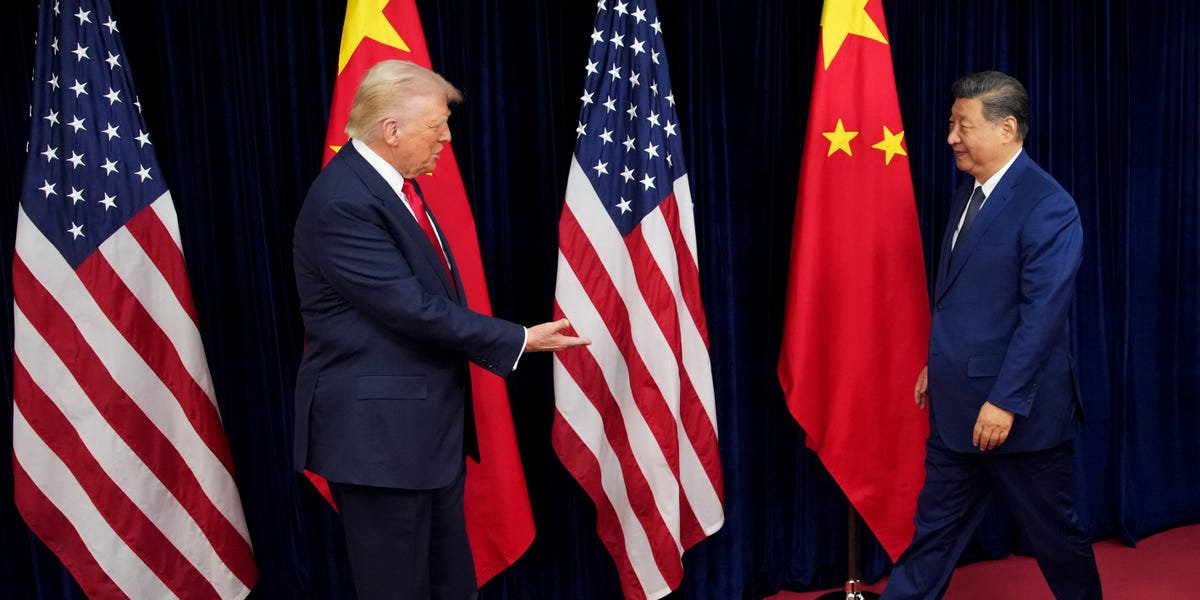
China has instructed its banks to reduce their holdings of US Treasury debt, according to reports this week, reigniting discussions about global financial markets and the “Sell America” narrative. Chinese regulators cited volatility and concentration risks in US debt as the primary reasons for the directive, though they did not explicitly frame the decision as a challenge to the dollar-dominated financial system.
Bloomberg reported that Chinese banks collectively hold approximately $298 billion in US dollar-denominated bonds, though the exact proportion consisting of US Treasurys versus corporate debt remains unclear. The instruction comes amid broader geopolitical tensions and economic shifts affecting both nations.
Market Impact and Expert Analysis
The immediate impact on treasury yields has been minimal, according to market observers. However, economists and financial analysts have expressed varying degrees of concern about potential longer-term consequences. The directive has prompted extensive commentary from experts about what China’s decision means for US Treasury holdings and the broader financial landscape.
Desmond Lachman, a senior fellow at the American Enterprise Institute, voiced significant concerns about the implications for the United States. He told Business Insider that the country desperately needs foreign investors to continue purchasing US Treasurys to provide financing. Foreign investors currently hold approximately 30% of outstanding US Treasury debt, according to Lachman.
“The drying up of foreign buying of our government’s bonds could set us up for a bond market and dollar crisis,” Lachman stated. Additionally, he noted that other nations have already begun shifting away from dollar-denominated assets, making China’s move particularly concerning.
Differing Perspectives on China’s US Treasury Strategy
In contrast, Brad Setser from the Council on Foreign Relations views the decision as primarily focused on China’s domestic economic needs. He believes the move reflects China’s efforts to stabilize its own economy and protect against volatility from the US after struggling economically in recent years.
Setser advised that global investors should pay closer attention to flows tied to China’s currency management. He expressed skepticism that Chinese state institutions will find adequate alternatives to the Treasury market if they continue buying $50 billion or more monthly to control yuan appreciation.
Meanwhile, Jai Kedia, an economist at the Cato Institute, shares the view that investors should not interpret China’s decision as primarily geopolitical. He told Business Insider that while he expects China to continue selling US Treasurys, the impact on American markets will likely remain limited.
Geopolitical Considerations and Future Outlook
“People have a way overestimated opinion of how much value of US government debt China actually holds,” Kedia stated. He acknowledged that massive bond offloading would impact markets but considers such a scenario unlikely.
However, Liqian Ren, director of modern alpha at WisdomTree Asset Management, interprets the move more explicitly through a geopolitical lens. She indicated that the decision is largely geopolitical with financial factors playing a secondary role. Ren suggested that preparations for potential regional conflicts are reinforcing incentives for both nations to reduce financial dependence.
Yan Wang, chief China strategist at Alpine Macro, sees the regulatory guidance as primarily about risk management while acknowledging geopolitical tensions as contributing factors. According to Wang, China has accelerated reducing its holdings of US assets, particularly US Treasurys, since Russia’s invasion of Ukraine. He claims US Treasurys account for roughly 20% of China’s reserves, likely exceeding the government’s comfort level.
Authorities have not confirmed specific timelines for implementation or indicated whether further guidance will follow. The full extent of China’s planned reduction in US Treasury holdings remains uncertain as markets continue monitoring the situation.