




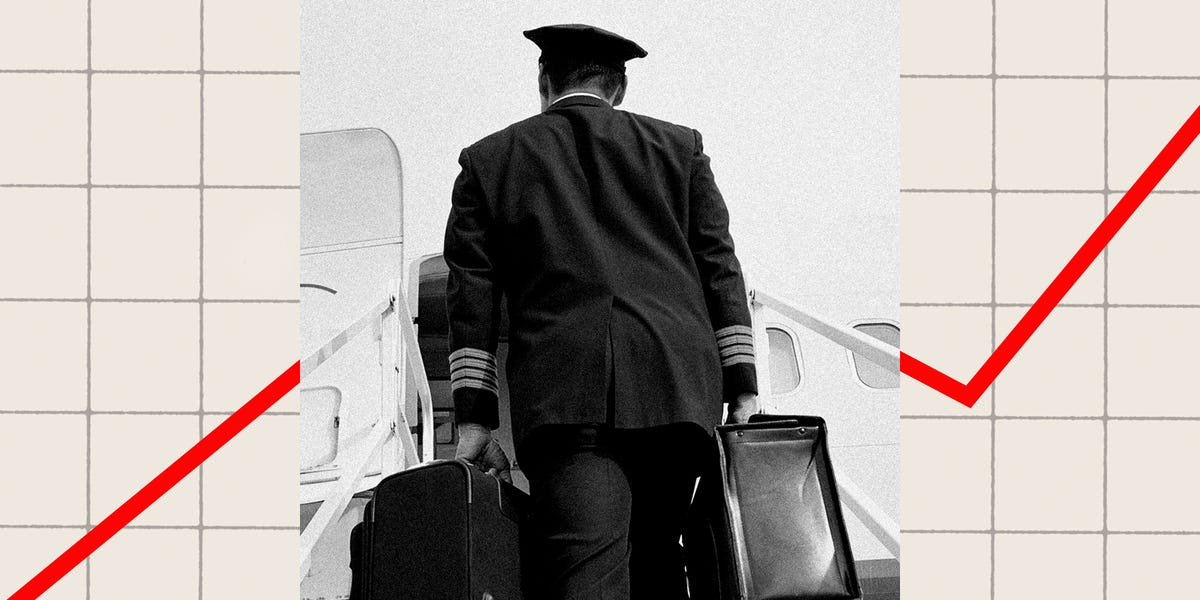
A growing number of airline pilots are turning to day trading and investing as a side hustle, driven by the financial instability exposed during the pandemic and the unique advantages of their profession. According to workforce intelligence firm Revelio Labs, the proportion of pilots with finance-related side hustles has nearly doubled over the past two decades, with sharp increases following the 2008 financial crisis and in 2020 when the aviation industry faced unprecedented challenges.
Jonathan Prieur, a 49-year-old Qatar Airways pilot, exemplifies this trend. He began trading forex during the pandemic after his contract with a new airline was canceled when air travel ground to a halt. Now, despite having a stable income, Prieur continues to execute short-term trades between flights, achieving monthly profits ranging from low single digits to over 10%, according to brokerage statements he shared with Business Insider.
Pandemic Sparks Surge in Pilot Trading Activity
The 2020 pandemic served as a wake-up call for many aviation professionals about the fragility of their industry. Greg Dlugi, a TUI Airways pilot who trades on the side, told Business Insider that investing culture received a significant push in 2020 when pilots realized how economically sensitive the travel industry could be. This realization prompted many to seek alternative income sources beyond their flying careers.
Additionally, data from Revelio Labs shows that the percentage of pilots with side hustles unrelated to aviation has risen four percentage points over the last two decades. The most dramatic increases occurred during periods of elevated unemployment in the aviation sector, particularly after the Great Financial Crisis and during the pandemic.
Why Pilots Are Well-Positioned for Trading
Several factors make pilots particularly suited for pursuing trading as a side hustle. According to Alex Tapia, a wealth planner at Pilot Money who works with aviation professionals, many pilots have substantial savings and disposable income to invest in markets. The average annual salary of pilots and co-pilots soared 98% from 1995 to 2020, according to the MIT Airline Data Project.
However, the most significant advantage pilots have is time. Federal Aviation Administration regulations prevent pilots from flying more than 100 hours per month, equivalent to approximately 12 business days. This leaves considerable downtime that many pilots now dedicate to market analysis and trading activities.
Meanwhile, the profession itself attracts individuals with certain personality traits that align with trading. Casey Smith, president of Wiser Wealth Management, noted that pilots tend to be independent-minded and accustomed to preparing for worst-case scenarios. These characteristics often lead them to seek financial autonomy outside their primary employment.
Pilots Balance Trading and Flying Responsibilities
Despite the demanding nature of both professions, many pilots have developed systems to manage trading alongside their flying duties. Dlugi, who regularly mentors other pilots in trading techniques, aims for an average 5% monthly return across his accounts. He monitors markets between flights and executes trades during layovers or from hotel rooms when opportunities arise.
In contrast, some wealth managers caution that pilots may not always translate their cockpit confidence into trading success. Smith emphasized that the confidence required for flying can sometimes work against pilots when managing their own money. Tapia echoed this concern, noting that overconfidence can proliferate in the profession and hinder market returns.
Nevertheless, younger pilots are also embracing trading as part of their long-term financial strategy. Nyasha Madziwa, a 23-year-old pilot completing flight instructor training, learned forex trading during the pandemic. He structures his days around both flying and trading, dedicating several hours to markets after returning from the airport, though he acknowledged still working toward consistent profitability.
According to Tapia, his firm has experienced approximately a 50% increase over the last five years in clients who are active short-term investors and regularly participate in markets. This trend suggests that pilot involvement in trading will likely continue to grow as more aviation professionals seek financial independence and diversified income streams beyond their flying careers.