





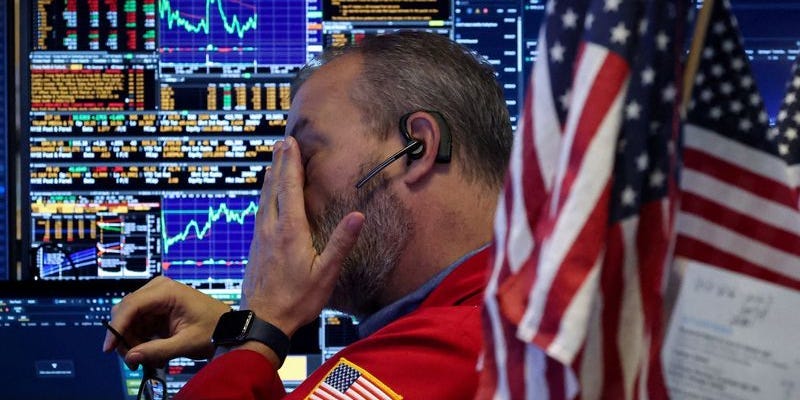
Bank of America analysts are pushing back against recent fears that artificial intelligence disruption justifies the ongoing tech sell-off, arguing that Wall Street is overreacting to AI concerns. The tech-heavy Nasdaq Composite dropped approximately 2% on Wednesday, extending losses from the previous session as investors responded to new AI developments and disappointing market reactions to recent earnings reports.
The latest wave of selling was triggered after AI startup Anthropic unveiled a new plugin for its Claude Cowork AI agent. According to analysts, this tool reportedly automates clerical tasks more effectively than traditional conversational chatbots, sparking concerns that AI technology could replace existing software solutions and unseat current market leaders.
Tech Sell-Off Concerns Mirror DeepSeek Episode
Bank of America drew parallels between the current market turbulence and the January 2025 sell-off sparked by Chinese AI company DeepSeek. That earlier episode erased $1 trillion in market capitalization within a single day and triggered significant short-term losses across Wall Street, according to the firm.
However, the analysts noted that despite widespread panic at the time, major indexes not only recovered from the DeepSeek-driven decline but ended 2025 with double-digit gains. Much of that recovery was fueled by continued AI momentum, suggesting that investor fears proved unfounded.
The bank emphasized that global cloud capital spending grew 69% in 2025 compared to the previous year, exceeding earlier forecasts despite persistent market worries. “In several respects, the current indiscriminate selloff resembles the DeepSeek-driven decline of Jan’25, which ultimately proved unfounded and was followed by higher capex and accelerating AI token growth,” Bank of America stated.
AI Disruption Fears Called Overblown
William Blair analysts characterized Anthropic’s new AI tool as the latest “boogeyman in software,” suggesting that disruption fears are overstated. The analysts acknowledged that some AI disruption is inevitable for software makers, particularly for point solutions and non-mission-critical tools, but emphasized that adaptation capabilities will determine winners and losers.
“There will naturally be some disruption, especially for point solutions, nice to have tools (as opposed to mission-critical systems), and vendors that are not able or willing to adapt to the new tech paradigm,” William Blair wrote. Additionally, the firm stated, “This does not justify the broad-based indiscriminate selling we are seeing across the sector.”
Sentiment Versus Fundamentals
Both analyst firms pointed to a disconnect between investor sentiment and underlying business fundamentals. Bank of America highlighted what it called “inconsistency in AI stock moves,” noting that current market behavior implies contradictory outcomes.
Meanwhile, the bank explained that price action suggests AI capital expenditures are deteriorating while simultaneously indicating AI adoption will become pervasive enough to make existing software workflows obsolete. “Both outcomes cannot occur at once,” the analysts wrote.
William Blair echoed this assessment, calling the software sector weakness a “sentiment problem” rather than a fundamental issue. The firm pointed to post-earnings declines in Microsoft and ServiceNow stocks despite strong financial results. Similarly, AMD shares fell over 17% on Wednesday even after the company beat earnings expectations on both revenue and profit lines.
Market observers will continue monitoring whether tech stocks stabilize as earnings season progresses, though the timing and extent of any potential recovery remain uncertain given ongoing investor anxiety around AI disruption.