





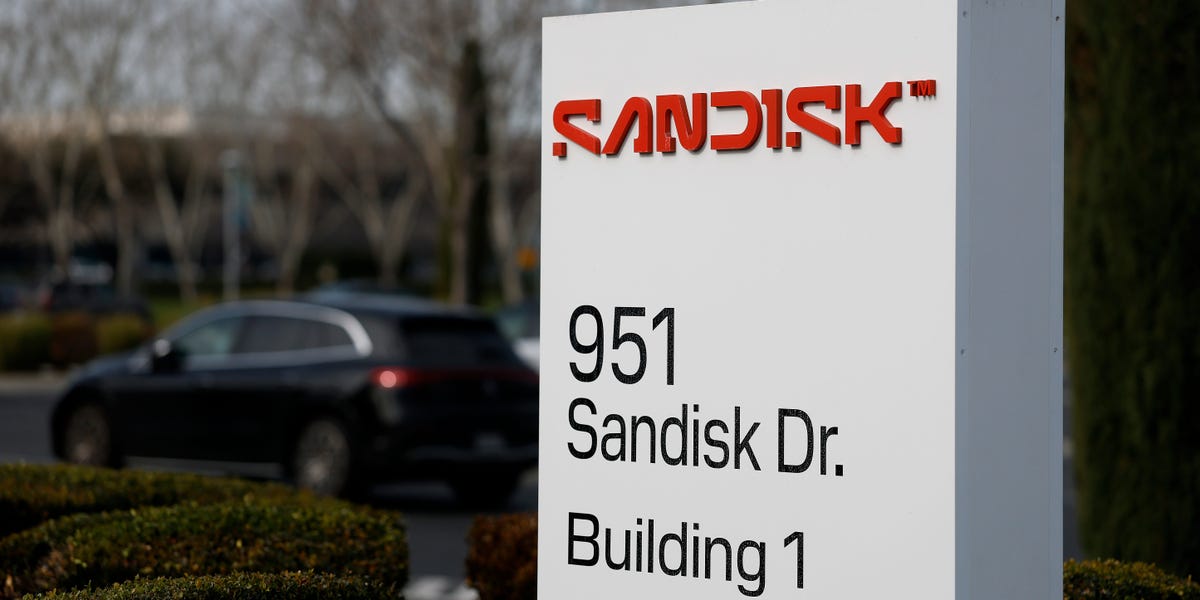
Memory stocks surged on Monday as investors responded to mounting evidence of an AI-driven memory chip shortage that analysts predict will extend into 2027. Major memory chip manufacturers including Sandisk, Micron, Western Digital, and Seagate Technology posted significant gains as recent earnings reports revealed demand from artificial intelligence data centers continues to far exceed available supply.
Tech intelligence firm IDC characterized the current situation as an unprecedented memory chip shortage, with multiple industry leaders reporting they cannot fulfill customer orders. According to Sandisk management, the company expects customer demand to remain well above supply beyond calendar year 2026, while reporting a 64% quarter-over-quarter increase in data center sales.
AI Data Centers Driving Memory Chip Demand
The supply constraint has become a central issue for memory manufacturers as artificial intelligence applications require increasingly large amounts of storage capacity. William Blair analysts described the phenomenon as a supercycle in full force, noting that strong demand and limited supply are driving an upcycle that could extend into 2027. According to their analysis, Micron indicated it was only able to meet half to two-thirds of demand from core customers.
Mizuho analysts identified four stocks positioned to benefit from the scramble for storage fueled by the AI boom. The firm maintains Outperform ratings on Sandisk, Micron, Western Digital, and Seagate Technology, citing pricing tailwinds in legacy DRAM and NAND markets as key drivers of future growth.
Memory Stock Performance and Price Target Increases
During Monday’s trading session, memory stocks delivered substantial returns to investors. Sandisk led the rally with a 16% gain, while Western Digital climbed 10%. Meanwhile, both Micron and Seagate Technology advanced 6% as traders anticipated continued pricing power for memory chip manufacturers.
Mizuho recently raised price targets for these memory stocks based on expectations of pricing upside and strong nearline momentum from AI applications. The analysts highlighted that the current supply-demand imbalance creates favorable conditions for sustained revenue growth and margin expansion across the sector.
Shortage Effects Ripple to Device Manufacturers
The memory chip shortage is creating knock-on effects for device manufacturers and end users beyond data center operators. Apple CEO Tim Cook addressed the issue during the company’s first-quarter earnings call, stating that memory supply shortages are expected to affect margins in the coming quarter.
Cook acknowledged the company is in a supply chase mode to meet very high levels of customer demand. Additionally, the CEO noted that market pricing for memory is increasing significantly beyond the second quarter, forcing Apple to evaluate various options to manage the constraints.
Industry Response to Memory Chip Supply Constraints
Bank of America analysts suggested that Apple has multiple levers available to address the supply pressure. The bank wrote late last week that apart from supply chain solutions, the iPhone represents a relatively price inelastic product where a $50-100 price increase would not materially shift the demand curve but would absorb most of the memory-related margin pressure.
However, the broader technology industry faces difficult decisions as memory chip prices continue rising. Device manufacturers must balance the need to secure adequate component supplies against maintaining competitive pricing in consumer markets where buyers may resist significant price increases.
The memory chip shortage is expected to persist through at least 2026 according to industry forecasts, with some analysts projecting supply constraints could extend into 2027. Market participants will be monitoring upcoming earnings reports and management commentary from memory manufacturers for additional clarity on production capacity expansion plans and timeline expectations for supply-demand equilibrium.