




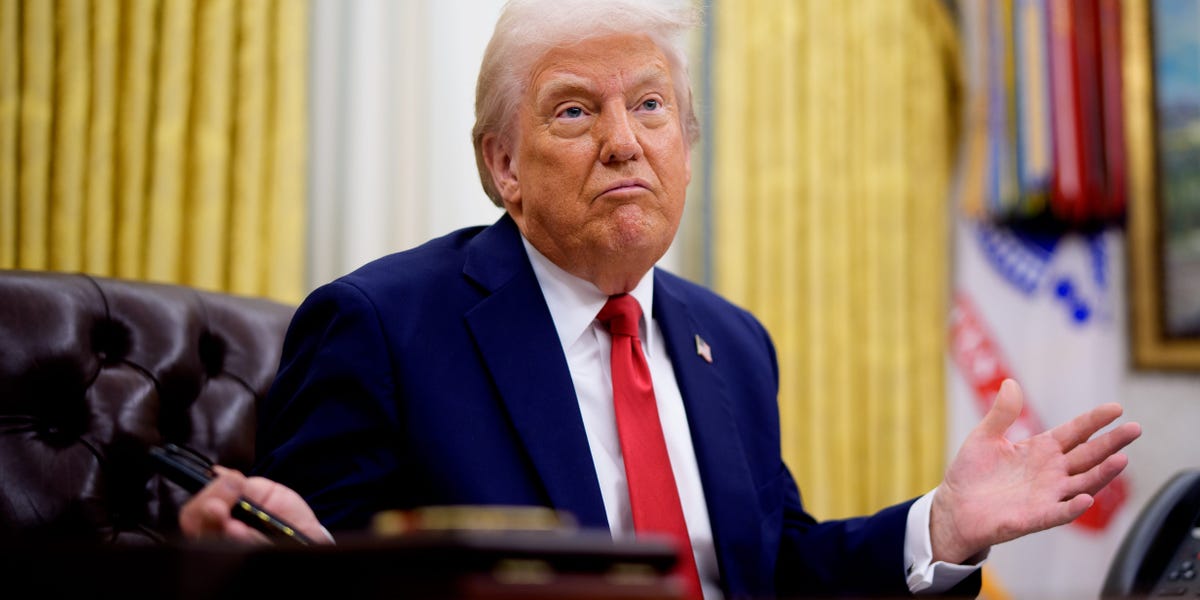
President Donald Trump’s relaxed stance on the weakening US dollar could undermine his efforts to lower borrowing costs for Americans, according to market analysts. The president told reporters in Iowa this week that the dollar was “doing great” and should “seek its own level,” comments that sent the weaker dollar to a four-year low and raised concerns among economists about potential inflationary pressures.
The US Dollar Index, which measures the greenback against a basket of major currencies, has declined approximately 10% over the past year. This drop reflects various pressures including investors shifting away from dollar-based assets and the Federal Reserve’s ongoing rate-cutting cycle, according to market data.
How a Weaker Dollar Affects Interest Rates
The relationship between currency strength and borrowing costs presents a significant challenge to Trump’s affordability agenda. A weaker dollar reduces Americans’ purchasing power abroad and increases the cost of imported goods, potentially driving up inflation. Higher inflation typically forces interest rates upward, contradicting the president’s goal of making borrowing more affordable for consumers.
Joe Kalish, chief macro strategist at Ned Davis Research, described the collapsing dollar as potentially Trump’s “Achilles’ heel.” In a note to clients on Wednesday, Kalish warned that if a new Fed Chair attempts to cut rates as early as June, currency traders could punish the dollar further, sending inflation expectations higher and worsening household affordability.
Bond Market Concerns Mount
Additionally, the weaker dollar contributes to the “Sell America” trade, where investors move away from US assets due to concerns about the economic outlook. This trend includes investors selling US bonds, which would push yields higher and increase borrowing costs across the economy.
Kalish noted that such a scenario could trigger the return of “bond vigilantes” who would demand higher returns on government bonds amid inflation worries. The 10-year US Treasury yield, a benchmark for various lending rates, stood at approximately 4.24% on Thursday, according to market reports.
Economic Experts Warn of Dollar Dilemma
Nela Richardson, chief economist at ADP, emphasized that a weak dollar could compromise market confidence in US Treasury bonds. She pointed to sticky inflation, high deficits and debts, and the government’s need to sell treasuries as additional economic challenges that require currency stability.
Richardson characterized the falling dollar as a “double-edged sword” for Trump’s economic agenda. Meanwhile, Robert Kaplan, Goldman Sachs’ vice chairman, stressed the importance of dollar stability given the nation’s debt burden.
However, Trump has previously praised the benefits of a weaker dollar for American exporters. Last year, the president suggested that US firms could “make a hell of a lot more money” because exports become more attractive to foreign buyers when the dollar declines.
Treasury Market Implications
In contrast to the potential export benefits, market professionals warn about the Treasury market’s health. Kaplan noted that with the United States carrying $39 trillion in debt heading toward $40 trillion, the government needs currency stability to successfully sell long-term Treasury bonds.
The tension between supporting exporters through a weaker dollar and maintaining attractive conditions for Treasury buyers presents a policy challenge. Foreign investors, who hold significant portions of US debt, may find dollar-denominated assets less appealing if the currency continues declining.
Market observers indicate that further dollar weakness could complicate the Federal Reserve’s monetary policy decisions. The central bank must balance supporting economic growth through lower rates against the inflationary risks associated with a declining currency.
Analysts continue monitoring currency markets and Treasury yields for signals about investor confidence in US economic policy. The administration has not indicated any immediate plans to intervene in currency markets or adjust its stated preference for allowing the dollar to find its natural level.