

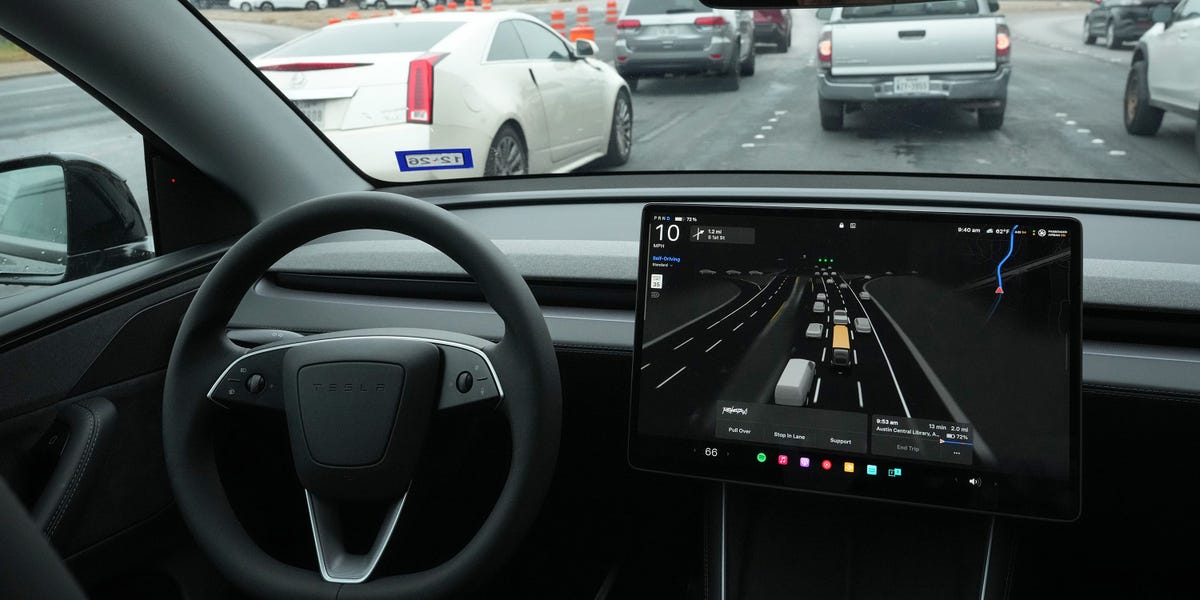
Tesla’s autonomous driving ambitions received a significant boost this week as a major insurance provider announced specialized coverage for self-driving vehicles. Online insurance startup Lemonade revealed it will offer autonomous vehicle insurance starting with Tesla cars equipped with Full Self-Driving technology, slashing rates by 50% when the autonomous driving software is actively controlling the vehicle. According to Morgan Stanley analysts, this development represents a “critical unlock” for the autonomous driving market.
The new Lemonade Autonomous Car insurance product marks a departure from the insurance industry’s traditionally cautious stance on self-driving technology. The company announced the initiative will initially focus on Tesla vehicles using their Full Self-Driving capabilities, with drivers receiving substantial rate reductions when the autonomous system is engaged.
Insurance Industry Gains Confidence in Autonomous Driving Technology
Morgan Stanley analysts characterized Lemonade’s announcement as an important shift in how insurers approach advanced driver-assistance systems. The move suggests growing confidence in real-world safety data collected from Tesla’s vehicle fleet, according to the investment firm. Instead of relying solely on theoretical models or regulatory classifications, insurers are now beginning to use actual driving outcomes to assess risk and performance.
Insurance providers have historically represented one of the largest obstacles to widespread autonomous vehicle adoption. High uncertainty surrounding liability issues and safety risks has made many companies reluctant to insure vehicles with self-driving capabilities. However, Lemonade’s willingness to offer specialized autonomous driving coverage indicates this barrier may be eroding.
Implications for Tesla and the Broader Self-Driving Market
The development comes at a critical time for Tesla, as the electric vehicle manufacturer has experienced declining sales for two consecutive years. CEO Elon Musk has increasingly positioned autonomous driving technology as central to the company’s future value proposition. Investors have largely justified Tesla’s premium stock valuation based on the potential of its Full Self-Driving technology rather than traditional automotive metrics.
Morgan Stanley noted that more accessible insurance could accelerate the adoption of autonomous driving systems across the industry. The analysts expect other insurance providers to follow Lemonade’s lead in offering specialized coverage for self-driving vehicles. As Tesla is widely considered a bellwether for the autonomous vehicle sector, developments affecting the company often signal broader industry trends.
Additionally, the insurance product could provide external validation for Tesla’s Full Self-Driving technology. Morgan Stanley analysts observed that the announcement suggests the system is transitioning from an experimental feature to an economically viable safety system. As insurers incorporate increasingly detailed driving data into their pricing models, technologies that demonstrably reduce risk should receive faster and more transparent recognition.
Market-Based Validation for Self-Driving Progress
The Morgan Stanley analysis emphasized that insurance companies may become one of the clearest market-based validators of autonomous driving progress. By using granular driving data and real-world performance metrics, insurers can provide objective assessments of safety improvements. This approach offers a practical alternative to regulatory approval processes, which have struggled to keep pace with rapidly evolving autonomous technology.
Meanwhile, the broader implications extend beyond Tesla to the entire autonomous vehicle industry. If insurance providers continue developing specialized products for self-driving cars, it could help address consumer concerns about liability and safety. Lower insurance costs could also improve the economic case for purchasing vehicles equipped with autonomous capabilities.
The rollout timeline for Lemonade’s autonomous vehicle insurance product and potential expansion to other manufacturers remains to be announced. Industry observers will be monitoring whether additional insurance companies introduce similar offerings and how this affects consumer adoption of autonomous driving technology.