





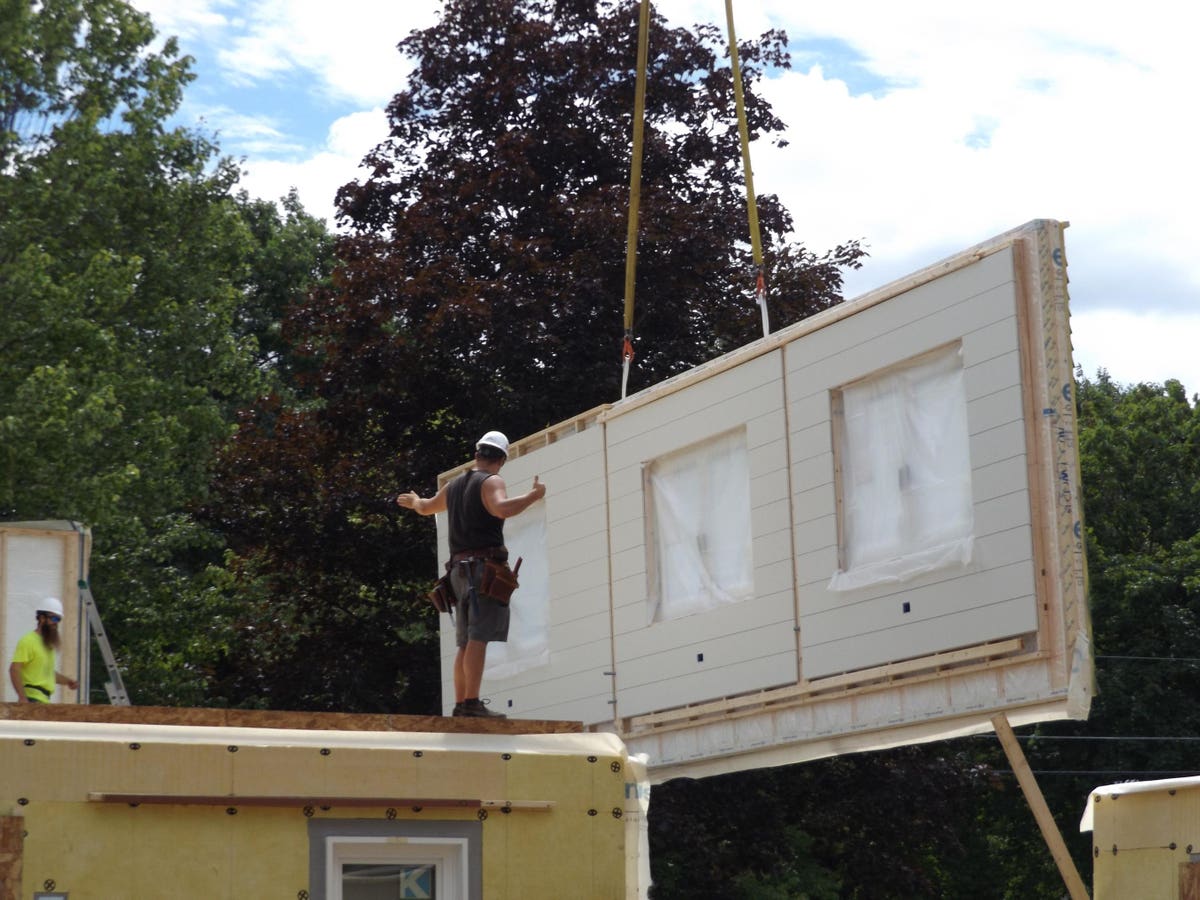
The housing affordability crisis is driving a fundamental shift in how homes are designed and built, with industry leaders calling for a move toward smaller, smarter homes that leverage new technologies and building methods. According to experts at Green Builder Media, the conversation around attainable housing needs to focus on what homebuyers actually want: smaller, more efficient homes that builders can construct today using innovative approaches. This shift comes as demographic trends show an aging population looking to downsize and younger buyers seeking affordable, environmentally responsible homeownership options.
The construction industry now has access to numerous cost-cutting technologies and methods that can make affordable housing a reality. New AI-driven platforms are reducing land acquisition time from weeks to minutes, while advanced design tools are streamlining the permitting process and cutting approval times in half.
Consumer Demand for Smaller Homes Drives Market Shift
Consumer preferences are evolving significantly, according to research from The Farnsworth Group. The majority of the aging population is actively seeking ways to downsize, while younger potential homeowners are looking for affordable entry points into the housing market without negatively impacting the environment. These changing demands are pushing home builders and developers to rethink their entire approach to residential construction.
Ron Jones, co-founder and president at Green Builder Media, emphasized that the industry needs to move beyond viewing housing as a simple transaction. “We need to talk more about homeownership as a sense of pride and intergenerational opportunity to grow wealth,” he said. The focus on cost per square foot is driving a race to the bottom that fails to consider the full value proposition of quality housing.
Todd Usher, founder and president at Addison Homes, pointed to the need for industry-wide improvement. “In our industry, we have no choice, we need to emulate the rest of modern industry that has focused on continuous improvement and maximize value instead of the cost per square foot mentality,” he said. Builders may need to construct slightly smaller homes while educating customers, appraisers, and lenders about the maximum value they can deliver.
Secondary Housing Costs Challenge Affordability
Beyond the initial purchase price, rising secondary costs are significantly impacting housing affordability. Don Worthington, a division manager at Primary Residential Mortgage, noted that taxes, insurance, and energy bills are consuming larger portions of housing budgets. The average real estate transaction often overlooks these ongoing expenses, even as they squeeze affordability for homeowners.
The mortgage industry is responding with significant changes to help address these challenges. This year, appraisal forms were updated to include energy efficiency evaluations in the first five pages, allowing underwriters to better understand the impact of efficient home design. This change provides advantages for all-electric homes, net zero designed homes, and manufactured products in the marketplace.
Additionally, energy data is expected to become a regular component of Multiple Listing Service information, putting critical efficiency metrics at appraisers’ fingertips. This visibility will help quantify homeownership costs as part of home equity and enable homeowners to compare the value of energy-efficient construction from different builders.
Technology Streamlines Land Acquisition and Permitting
AI-driven platforms are revolutionizing traditionally slow processes in housing development. Prophetic, an AI platform, reports a 32-times improvement in land acquisition speed, reducing what previously took three to four weeks down to just minutes. According to Oliver Alexander, founder and CEO of Prophetic, the platform can extract zoning information from documents and organize land data in ways that weren’t possible before sophisticated AI became available.
Meanwhile, permitting challenges that have long delayed projects are being addressed through innovative technology solutions. Spacial, an AI-powered platform, is helping architecture and design firms reduce plan preparation time from ten weeks to less than one week. The company delivers complete sets of permit-ready documents while identifying code compliance issues before submission, eliminating costly revision cycles.
Robbie Leer, founder and CEO at Turbopermit, reports saving up to 50% of the average time required for permit approval. This efficiency allows builders to take on more projects with existing staff levels, directly addressing labor constraints while improving profitability on affordable housing projects.
Component-Based Building Solutions Reduce Construction Time
Major manufacturers are introducing component-based solutions that simplify installation and reduce the number of trades required on job sites. Owens Corning recently launched EZSheath Structural Insulated Sheathing, a four-in-one system combining structural sheathing, continuous insulation, and air and weather protection into a single installation system. The product is up to 50% lighter than traditional OSB, making it easier for workers to handle and install.
Brian Caulkins, a sales leader at Owens Corning, explained that the system aims for labor simplification rather than just cost reduction. However, the assembled cost with labor remains competitive with traditional sheathing methods. The product also saves two inches of space compared to conventional construction, an important consideration as floor plans shrink to reduce costs.
CertainTeed ONE Precision Assemblies represents another example of manufacturers developing component-based approaches to affordable, high-quality housing solutions. These systems reduce job site waste and installation complexity, addressing both cost and labor availability challenges facing the industry.
Installation Speed Improvements Address Labor Shortages
With labor challenges ranking among the biggest obstacles in construction, numerous products are being designed for faster and easier installation. Rheem’s residential HVAC line, Endeavor, features digital tools and integrated connectivity that installers report speeds installation by 54% compared to other brands. The system also delivers up to 62% faster diagnostics, reducing both setup and troubleshooting time on job sites.
Construction project management platform Buildxact is helping custom home builders create estimates with 97% accuracy in less than 90 seconds, completing the process seven times faster than manual methods. Schneider Electric has launched EV chargers with built-in load management technology, allowing builders to install charging capabilities on existing electrical systems without costly panel upgrades.
These future-ready electrical solutions include panels and breakers designed for modular upgrades that can support solar, battery storage, and additional loads without significant expense. This approach not only helps builders’ bottom lines but also positions them as providers of homes that can adapt to evolving homeowner needs and rising energy costs.
As investment flows toward these innovations and builders increasingly adopt smaller, smarter home designs, the industry appears poised for meaningful progress on housing affordability. However, widespread implementation will depend on continued education of consumers, appraisers, and lenders about the value proposition beyond simple cost per square foot calculations.