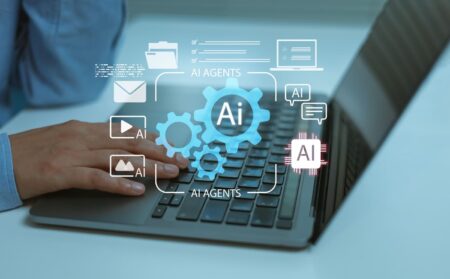





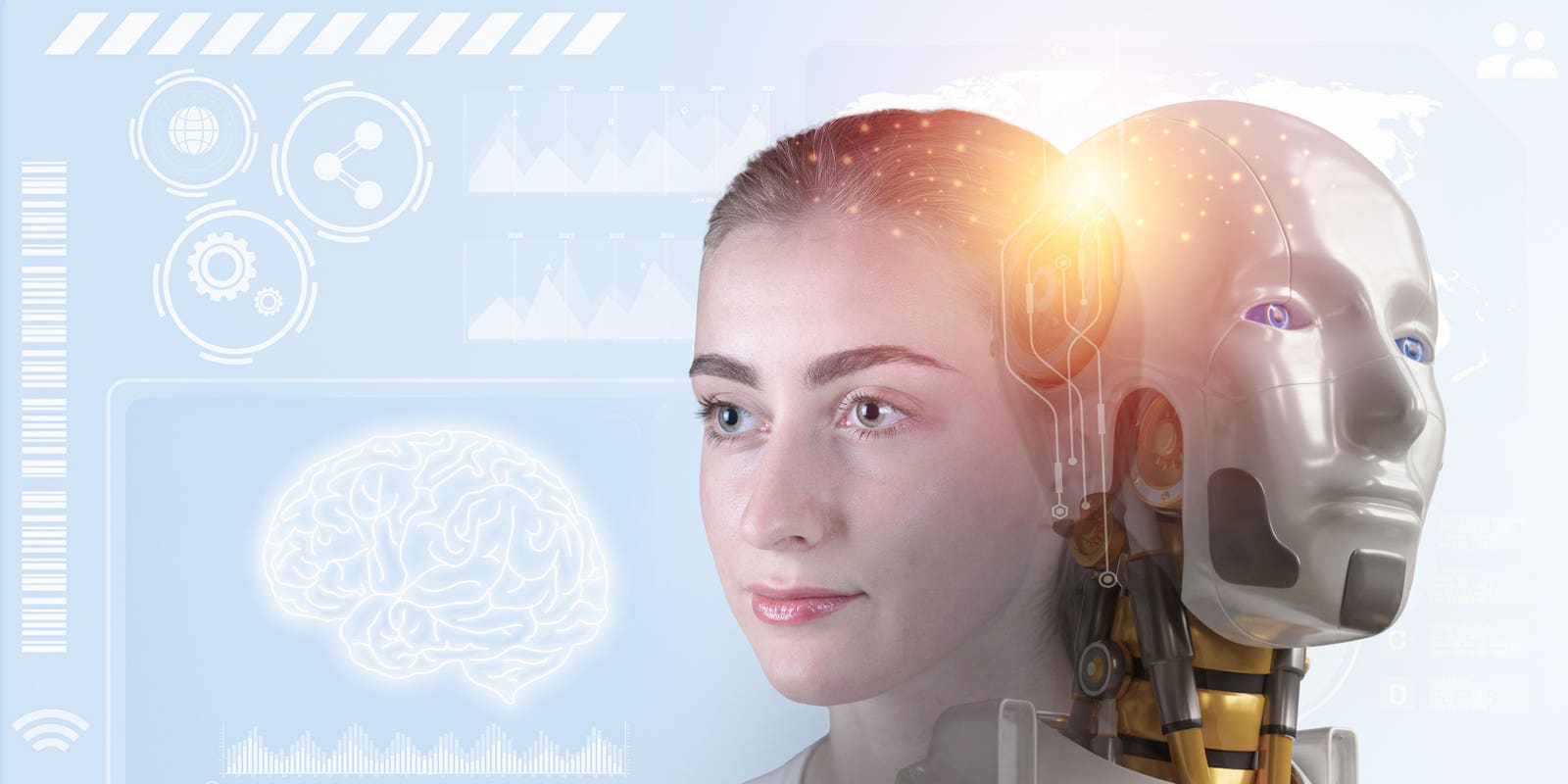
The rise of artificial intelligence in the workplace is creating new paradigms for professional collaboration, with the AI colleague relationship emerging as a transformative model where machines and humans engage in genuine two-way intellectual exchange. According to Salesforce research on agentic AI’s impact on the workforce, 80% of HR leaders believe that within five years most workforces will have humans and AI agents working side by side. This represents a fundamental shift from AI as a passive tool to AI as an active thinking partner.
The AI colleague relationship differs significantly from traditional tool-based interactions where humans direct and machines execute. In this dynamic, artificial intelligence proposes ideas, challenges assumptions, iterates on concepts and sometimes surprises its human counterpart. The professional acts less like a commander and more like a lead collaborator who sets direction while remaining open to where the conversation evolves.
How the AI Colleague Relationship Functions
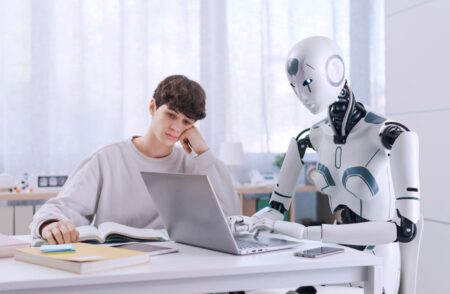
This collaborative approach grants AI a degree of autonomy that enables meaningful intellectual exchange. A strategist might ask an AI assistant to challenge assumptions on a market analysis, receiving pushback on overlooked variables and alternative frameworks. The human professional then evaluates, refines or disagrees with suggestions, creating a dialogue that produces sharper outcomes than either party could achieve alone.
Additionally, this relationship thrives in environments characterized by complexity and ambiguity. When problems lack single correct answers and creative tension adds value, AI as a thinking partner delivers capabilities beyond simple task execution. Researchers debate hypotheses with AI assistance, product managers use artificial intelligence to stress-test go-to-market strategies, and writers employ AI to argue contrarian positions against their own theses.
Enterprise Adoption and Market Projections
Gartner projects that by 2028, 33% of enterprise software applications will incorporate agentic AI, enabling 15% of daily business decisions to be made with AI acting as an active participant rather than a passive responder. This represents a significant acceleration in how organizations structure decision-making processes and professional workflows.
However, the transition requires careful navigation of trust and delegation dynamics. Professionals who excel in working alongside AI colleagues maintain intellectual sovereignty, treating AI input as valuable perspective rather than authoritative verdict. The ability to discern when to accept, refine or reject AI suggestions becomes a critical professional skill.
Challenges and Considerations
Meanwhile, research from the World Economic Forum indicates that while daily AI users report stronger engagement and motivation at work, they also experience weaker connections to their human colleagues. This suggests the AI colleague relationship works best when it enhances rather than replaces human collaboration within teams.
The risk of over-delegation represents another concern as organizations integrate AI more deeply into knowledge work. Determining appropriate boundaries for AI autonomy while preserving human judgment and accountability remains an ongoing challenge for enterprise leaders and individual professionals alike.
In contrast to simpler automation models, the colleague dynamic demands intellectual confidence and willingness to engage with AI-generated challenges. This requires professionals to develop new competencies around evaluating machine-generated perspectives and integrating them productively into their thinking processes.
Organizations are currently developing frameworks and policies to govern these evolving human-AI working relationships as the technology continues advancing. The balance between leveraging AI capabilities and maintaining human oversight will likely remain a central consideration as more enterprises adopt agentic AI systems in coming years.