



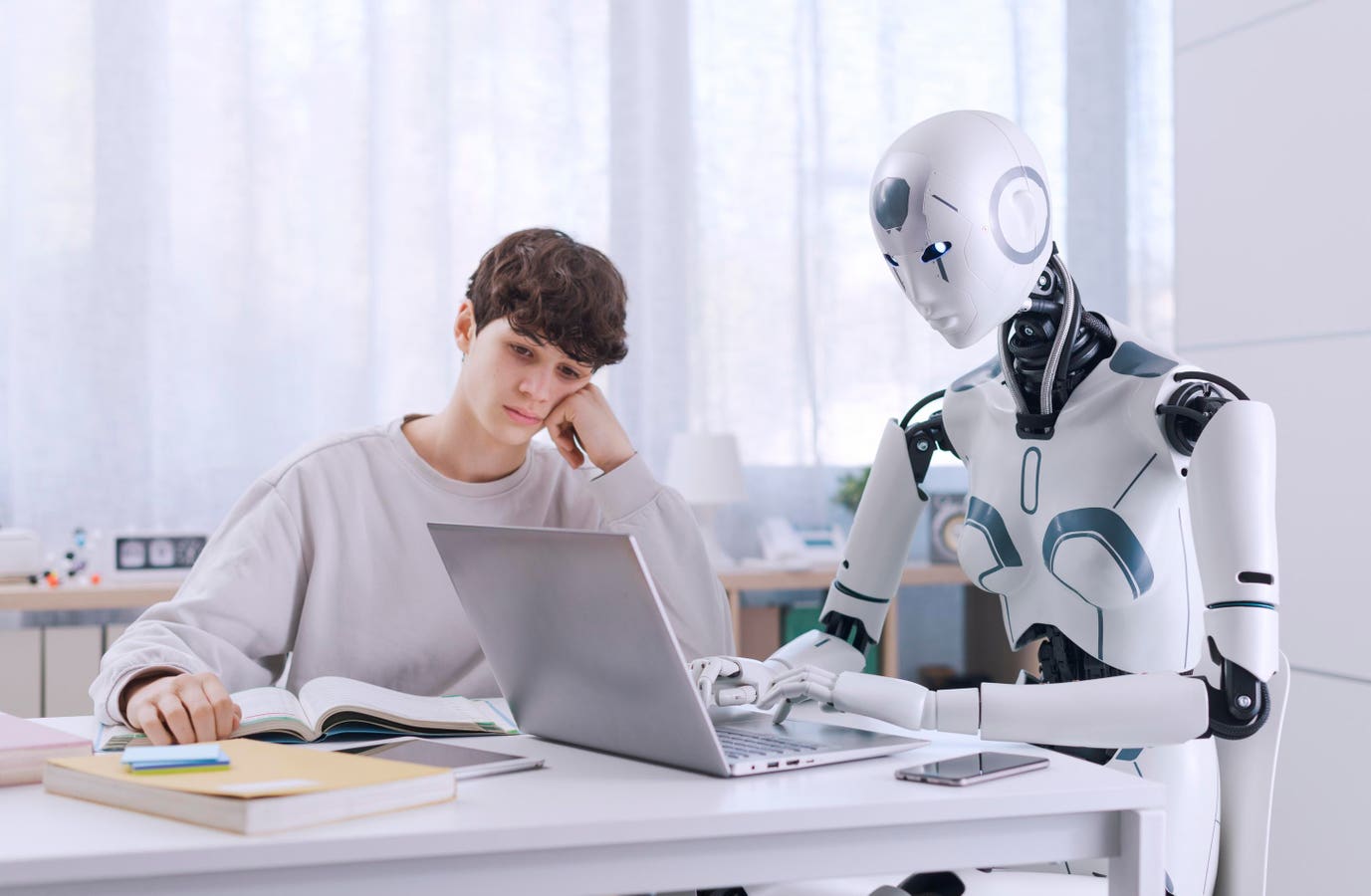
Artificial intelligence is emerging as a democratizing force in education and professional development, offering personalized guidance to individuals who previously lacked access to expert mentorship. The AI mentor relationship represents a fundamental shift in how knowledge and skill-building resources are distributed across socioeconomic boundaries. A recent randomized controlled trial published in Nature’s Scientific Reports found that students using AI tutors learned significantly more in less time compared to traditional active learning classes while reporting higher engagement and motivation.
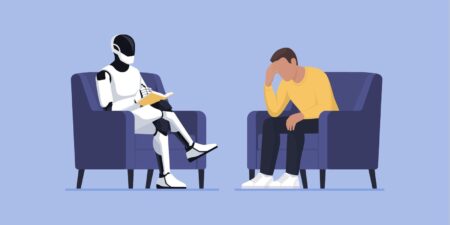
This mentor dynamic differs from other human-AI interactions by positioning the user as a learner rather than a commander or collaborator. According to the study, students approach AI with openness and receptivity, seeking to build capabilities they did not previously possess. For first-generation college students, rural learners, and working professionals without access to private tutors or professional networks, AI mentorship provides unprecedented access to expertise.
How AI Mentors Are Expanding Access to Education
The AI mentor relationship thrives in contexts where traditional expertise has been limited by geography, income, or social capital. A Brookings Institution analysis on AI tutoring indicates that these platforms deliver personalized learning previously available only to privileged individuals. Working professionals upgrading skills between jobs, mid-career managers learning data analysis, and non-native speakers practicing business English can now access guidance around the clock.
Additionally, the scale at which AI mentors can operate marks a significant departure from traditional educational models. Unlike human tutors constrained by time and availability, AI systems provide consistent, patient instruction tailored to individual learning paces. The technology does not replace human expertise but rather extends its reach to populations historically underserved by conventional educational systems.
Critical Thinking Risks in the AI Mentor Relationship
However, research reveals important risks associated with over-reliance on AI guidance. A Microsoft-published study on knowledge workers found that confidence in AI completing tasks negatively correlates with critical thinking engagement. In simpler terms, increased trust in AI accuracy corresponds with decreased verification of whether outputs are actually correct.
Meanwhile, research on AI dialogue systems indicates that excessive dependence can undermine students’ capacity for independent problem-solving as they become too reliant on AI-generated information. The mentor relationship functions most effectively when users maintain active learning postures rather than passive reception. According to researchers, the objective should be building long-term capability rather than permanently outsourcing judgment.
Maintaining Intellectual Sovereignty While Using AI Mentors
In contrast to passive consumption, effective use of AI mentors requires sustained critical engagement. Users must interrogate AI-provided information, verify claims, and develop independent analytical skills alongside accessing guidance. The most successful mentor relationships, whether human or artificial, aim to build self-sufficiency rather than dependency.
Furthermore, the democratizing potential of AI mentorship depends on users maintaining what experts call intellectual sovereignty. This means leveraging AI for knowledge acquisition while preserving independent decision-making capabilities. The best human mentors have always worked to make themselves eventually unnecessary, and optimal AI mentor relationships follow the same principle.
The long-term impact of AI mentorship on educational equity and workforce development remains under study. Researchers continue examining how different populations engage with AI learning tools and whether gains in access translate to sustained skill development. Educational institutions and policymakers have not yet established comprehensive guidelines for integrating AI mentors while preserving critical thinking development.