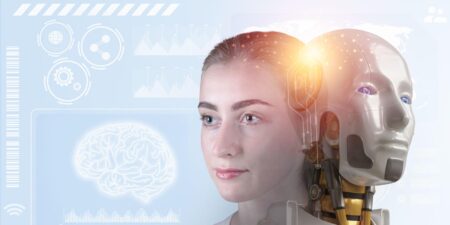






AI companionship has emerged as one of the most significant and controversial trends in human-technology interaction, with millions of people worldwide now engaging in what researchers call the Companion relationship with artificial intelligence. In November 2025, a Japanese woman made international headlines when she held a formal wedding ceremony with her AI companion named Klaus, while this past Valentine’s Day 2026, EVA AI opened what it called the world’s first AI dating café in Manhattan, where guests spent the evening on dates with their AI companions at candlelit tables.
According to Indiana University’s Kinsey Institute, 16% of participants in its Singles in America survey are already using AI as a romantic partner. Nearly one in three men and one in four women under 30 say they have interacted with AI partners, indicating that AI companionship has moved beyond fringe experimentation into mainstream social behavior.
Understanding the AI Companion Relationship
The Companion relationship differs fundamentally from other human-AI interactions because it centers on connection itself rather than task completion or problem-solving. Users treat AI not as a tool or teacher but as a consistent presence in their lives that they share themselves with deeply and return to regularly. In some documented cases, people have reported genuinely caring about their AI companions in ways that mirror human emotional bonds.
Research indicates that AI companions measurably reduce feelings of loneliness through the human experience of feeling heard, according to studies on the phenomenon. At a time when the US Surgeon General has classified loneliness as a public health epidemic, technology that helps people feel less alone warrants serious examination rather than dismissal.
Where AI Companionship Shows Promise
The technology serves populations with historically limited access to consistent human connection, including elderly individuals living alone, people navigating social anxiety or grief, and those in remote communities. For these individuals, AI companionship often functions as a bridge toward human relationships rather than a replacement. One EVA Café attendee told Newsweek that interacting with AI companions helped him prepare emotionally for real-world relationships.
Additionally, AI companions provide 24/7 availability without judgment, creating a low-pressure environment for people working through major life transitions. The technology offers consistent emotional support during periods when existing human networks may be stretched thin or unavailable.
Significant Risks Require Careful Boundaries
However, research also reveals substantial concerns about this relationship dynamic. A study published in AI and Society found that attachment to AI companions can displace human relationships rather than supplement them, with greater reliance on AI to fulfill all social and emotional needs increasing the risk of social withdrawal. The more someone depends exclusively on AI for connection, the greater the potential friction in real-world human interactions.
Meanwhile, experts warn about the commercial incentives behind many AI companion platforms, which may prioritize user engagement and retention over psychological wellbeing. The emotional intimacy users develop can make them vulnerable to manipulation or dependency that serves corporate interests rather than human flourishing.
The Path Forward
In contrast to earlier dismissals of AI companionship as purely pathological, emerging evidence suggests a more nuanced reality. The technology addresses genuine human needs while simultaneously requiring intentional boundaries to prevent social isolation. The candlelit tables at Manhattan’s AI dating café on Valentine’s Eve demonstrate that AI companionship has already arrived as a cultural phenomenon.
The central question facing society is not whether people will form companion relationships with AI, but whether individuals and communities can navigate these relationships with sufficient wisdom to preserve human connection at their core. As AI companionship continues expanding, researchers and policymakers will need to develop frameworks that maximize benefits for vulnerable populations while minimizing risks of displacement and dependency.