





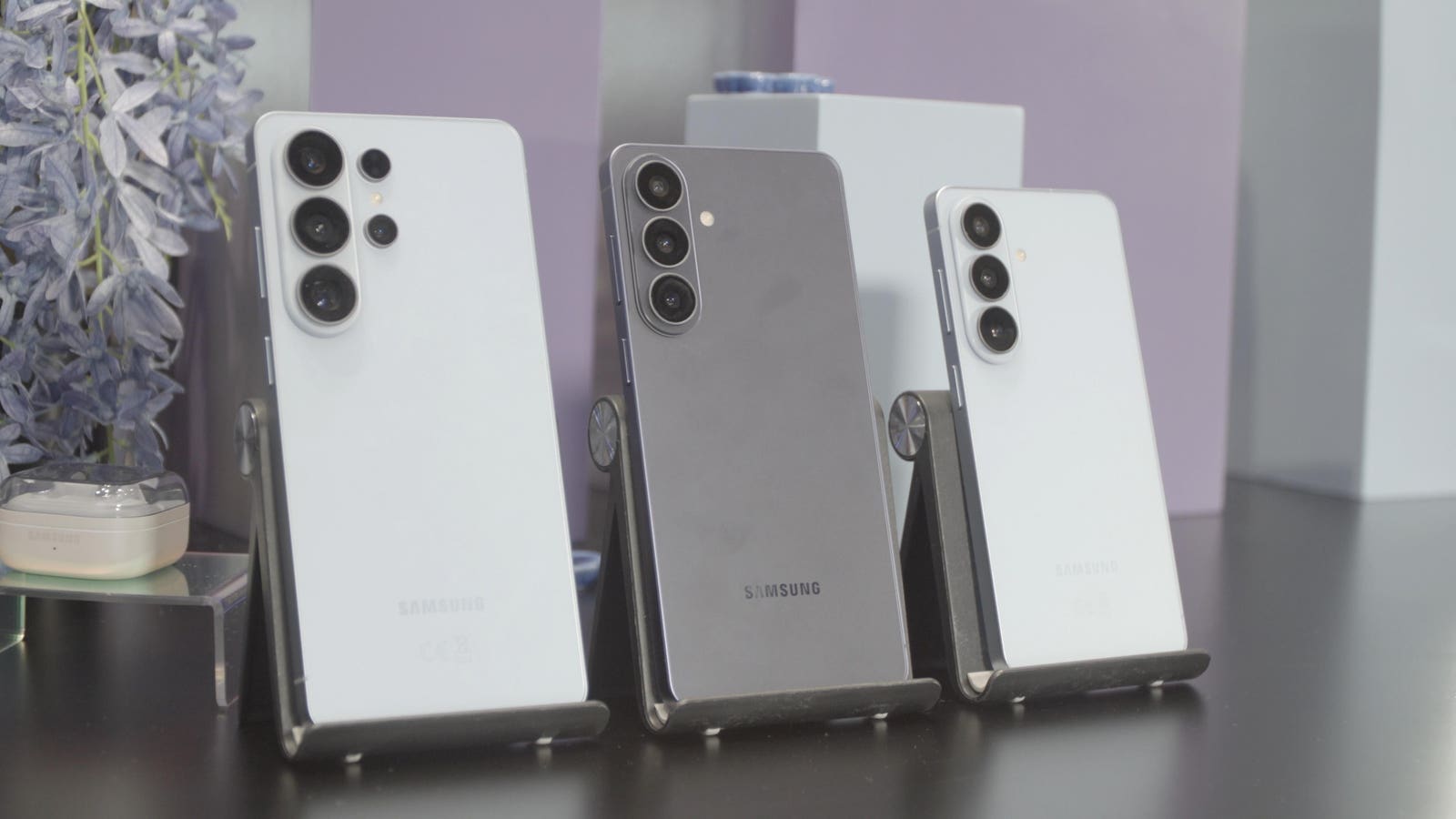
Samsung has unveiled pricing details for its Samsung Galaxy S26 series alongside several unexpected features that were kept secret until launch. The new flagship lineup, which includes the Galaxy S26, S26 Plus, and S26 Ultra, sees price increases across most models due to the global memory chip shortage affecting production costs. UK prices start at £879 for the base model, £1,099 for the S26 Plus, and £1,279 for the S26 Ultra, representing increases of £30 to £100 compared to previous generation models.
In the United States, according to Samsung officials at a London press briefing, the Galaxy S26 base model now costs $899.99, up from $799.99 for the S25, while the S26 Plus reaches $1,099.99, increased from $999.99. The Galaxy S26 Ultra maintains its previous price point at $1,299.99. All devices now start at 256GB storage, with Samsung eliminating the 128GB option entirely from the lineup.
Memory Chip Shortage Drives Samsung Galaxy S26 Price Increases
The price increases reflect rising production costs stemming from the global memory shortage, according to industry reports. AI data centers have consumed significant memory chip supplies, driving up manufacturing expenses that Samsung is now passing to consumers. Additionally, the elimination of the 128GB storage tier suggests the company found profit margins too slim on entry-level configurations during the current supply constraints.
However, Samsung emphasized that the Samsung Galaxy S26 price adjustments come with substantial hardware and software upgrades. The company invested five years developing what it considers the standout feature of this generation: a hardware-based privacy screen built directly into the display technology.
New Privacy Screen Technology Marks Major Innovation
The privacy display represents a significant engineering achievement, according to hands-on demonstrations at the London event. The screen blacks out at specific viewing angles and becomes increasingly opaque as users move away from direct viewing positions. Samsung offers multiple privacy modes, including selective activation for specific applications or notifications only.
Users can configure the privacy screen to obscure password entry fields or notifications from particular apps while keeping the rest of the display visible. Industry observers have compared the innovation favorably to Google’s surprise introduction of 3D Face Unlock technology on the Pixel 4 XL, noting both represent unexpected engineering advances in smartphone design.
Bixby Receives Natural Language Device Expert Upgrade
Samsung’s Bixby assistant gains new functionality as a natural language device expert across the Galaxy S26 lineup. The upgraded system allows users to request settings changes without knowing specific feature names or menu locations. For example, users can ask about eye strain and Bixby will activate the Eye Comfort Shield automatically.
The assistant can also establish automated routines through simple commands. Meanwhile, demonstrations showed Bixby responding to queries about accidental touch protection and scheduling display brightness adjustments for specific times. This approach makes thousands of customization options accessible through conversational requests rather than manual navigation through settings menus.
Camera Improvements Focus on Low-Light Performance
The Samsung Galaxy S26 Ultra features improved nighttime photography and videography capabilities through its 200MP main sensor with a wider f/1.4 aperture. Enhanced noise reduction algorithms complement the hardware improvements for brighter images and videos in challenging lighting conditions. The Ultra model includes a 50MP ultrawide, 50MP 5x periscope telephoto, 10MP 3x telephoto, and 12MP front camera.
In contrast, the standard S26 and S26 Plus utilize a 50MP main sensor, 12MP ultrawide, 10MP 3x telephoto, and 12MP front camera. New generative AI editing tools enable users to add or remove image elements through text prompts, though demonstrations revealed the feature requires internet connectivity in some instances.
Exynos Returns While Ultra Model Retains Snapdragon Processor
Samsung’s Exynos 2600 processor powers the standard S26 and S26 Plus in European markets, while the Snapdragon 8 Elite Gen 5 drives the S26 Ultra. The company acknowledged previous public criticism of Exynos chips and claims improvements through adoption of 2nm architecture. Performance assessments in real-world conditions will emerge in coming months as devices reach consumers.
Additionally, Samsung confirmed the absence of a Galaxy S26 Edge model from this launch cycle. Technology developed for ultra-slim designs has instead been incorporated into the main S26 series, resulting in slimmer and lighter devices with rounder edges compared to predecessors.
Battery Specifications and Charging Capabilities
Despite reduced dimensions, the Galaxy S26 Ultra maintains its 5,000mAh battery capacity. The base S26 receives a larger 4,300mAh battery, while the Plus model retains its 4,900mAh capacity. The Ultra supports 60-watt charging reaching 75% capacity in 30 minutes, with 25-watt wireless charging available.
However, Samsung opted against integrating magnets directly into the devices for Qi2 wireless charging. Instead, all official cases will include magnets, with the company noting most users employ cases regardless. This decision has disappointed some advocates of magnetic attachment systems.
The Samsung Galaxy S26 series launches on March 11, with Samsung confirming the return of its double storage promotion despite earlier rumors suggesting cancellation due to memory chip constraints. The promotion allows buyers to receive 512GB models at 256GB pricing, partially offsetting the base price increases across the lineup.