




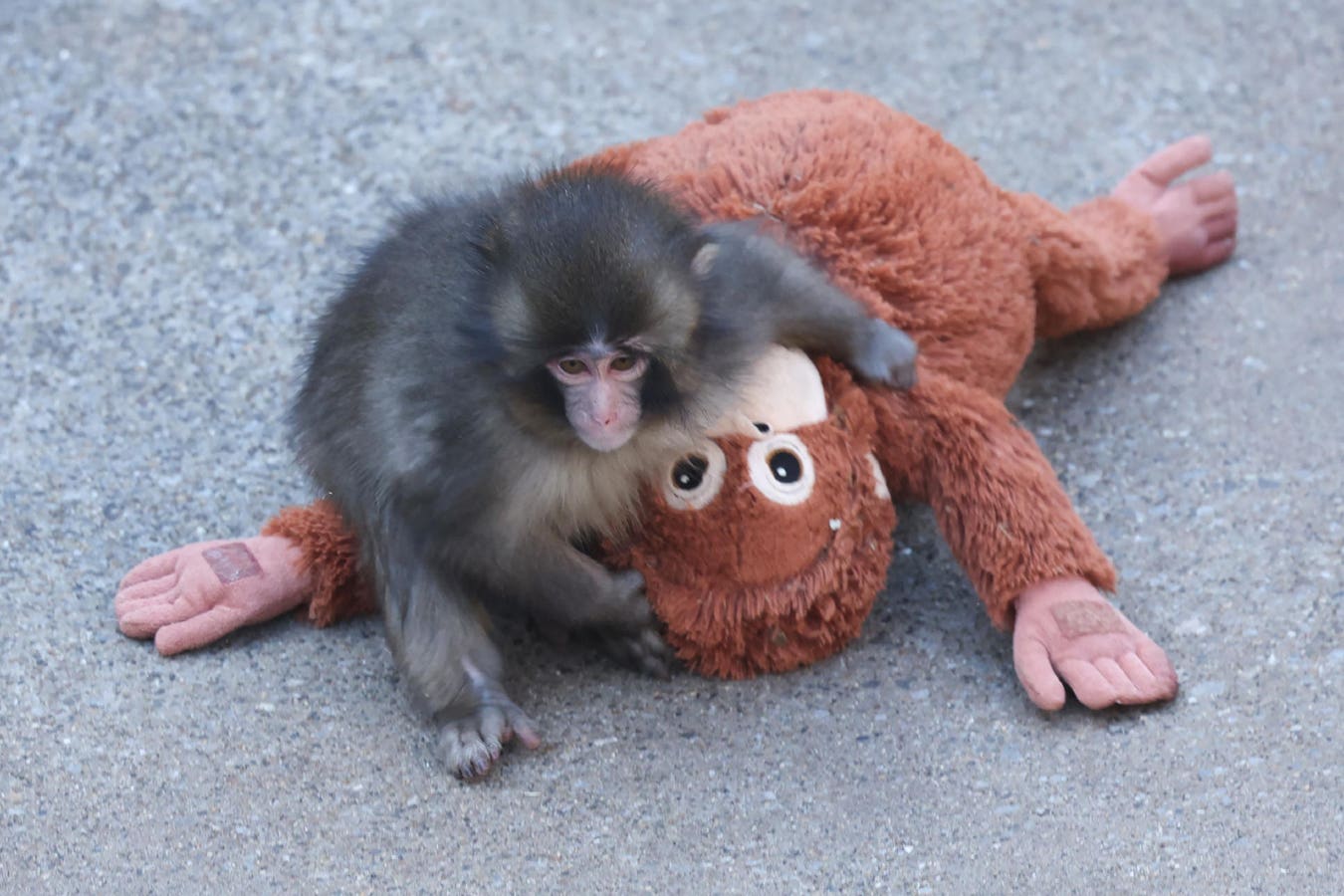
A young macaque monkey at a Japanese zoo has captured hearts worldwide after videos showed him clinging to a stuffed orangutan toy for comfort following rejection by his mother and troop. Punch, a 7-month-old resident of Ichikawa City Zoo and Botanical Gardens near Tokyo, has inspired an outpouring of sympathy that now includes original songs dedicated to his story. The viral monkey’s plight has resonated so deeply with online audiences that musicians are composing emotional tributes to his experience of loneliness and abandonment.
According to social media posts that have garnered millions of views, Punch was abandoned by his mother at birth and subsequently shunned by other members of his macaque group. Some footage even shows adult monkeys attacking the infant, prompting zookeepers to provide him with a plush orangutan for companionship.
Musicians Channel Empathy for Viral Monkey Into Original Songs
New York-based actor and songwriter Oliver Richman created “Other Mothers (Punch’s Soliloquy),” a melancholy ballad that imagines the world from the young primate’s perspective. The song has accumulated more than 97,000 likes on TikTok, according to recent counts. “Other mothers stand and fight, always hold their children right, and never let the world attack,” Richman sings in the tribute, asking “So why oh why does my mom never seem to hug me back?”
Meanwhile, Nashville singer-songwriter Sarah Henderson composed her own country-influenced tearjerker about the viral monkey. “Mama, can you hold me? Make this a better day,” Henderson performs in her TikTok video. “Mama, I am lonely and I’m always in the way.” Both artists said they felt compelled to express the collective heartache people experienced watching Punch’s story unfold.
Zookeepers at Ichikawa City Zoo believe the abandonment occurred because Punch’s mother was giving birth for the first time during a heatwave, according to reports. The stress of these circumstances may have overwhelmed her maternal instincts. Additionally, macaques sometimes sacrifice offspring care when their own survival feels threatened, experts note.
Why Punch Resonates With Global Audiences
Research indicates that humans are neurologically wired to care for infants, particularly those with traits like round faces and large eyes that resemble human babies. However, Punch’s situation has struck an especially emotional chord beyond typical cute animal content. The internet previously embraced viral animals like Moo Deng, the pygmy hippo from Thailand who inspired merchandise and makeup tutorials, but Punch’s narrative of rejection adds a deeper emotional layer.
“There’s something absolutely soul-crushing about watching someone as innocent as Punch run to the arms of his stuffed-animal mother after being attacked by other macaques,” Richman said in an interview. He added that the story speaks to a collective human longing to belong and the difficulty of finding acceptance. In contrast to lighthearted viral animal moments, Punch’s experience touches on universal feelings of isolation.
Henderson echoed these sentiments, noting that witnessing animal suffering creates a distinct type of pain. “Sadness for an animal is another level of pain,” she explained in an interview. “The majority of people love and care for animals, so it’s definitely a universal grief watching this little guy.” The viral monkey has become a symbol for anyone who has felt rejected or alone.
Positive Developments at the Zoo
Fortunately, recent updates suggest Punch’s situation is improving at Ichikawa City Zoo and Botanical Gardens. The young macaque is reportedly socializing more with his troop, and videos show him finally receiving embraces from adult monkeys. Nevertheless, the earlier images of Punch clutching his stuffed companion remain etched in viewers’ memories.
The widespread attention has significantly increased visitor traffic to the Japanese zoo where Punch resides. Travel guides have emerged detailing how international fans can visit the famous monkey in Ichikawa, located just northeast of Tokyo. For those unable to make the journey, social media provides continuous updates on his progress and well-being.
Richman, who creates and posts a new song daily, said the response to Punch demonstrates something hopeful about human nature. “It’s been sad but uniting to watch the internet come together and empathize with Punch’s experience,” he noted. He added that viewers have observed how Punch remains unaware that millions around the world are rooting for his happiness, a reminder that support often exists even when we cannot see it.
Zoo officials continue monitoring Punch’s integration with the troop, though no timeline has been provided for when he might be fully accepted by his fellow macaques. The long-term outcome of his socialization efforts remains to be seen as keepers work to ensure his emotional and physical well-being.