





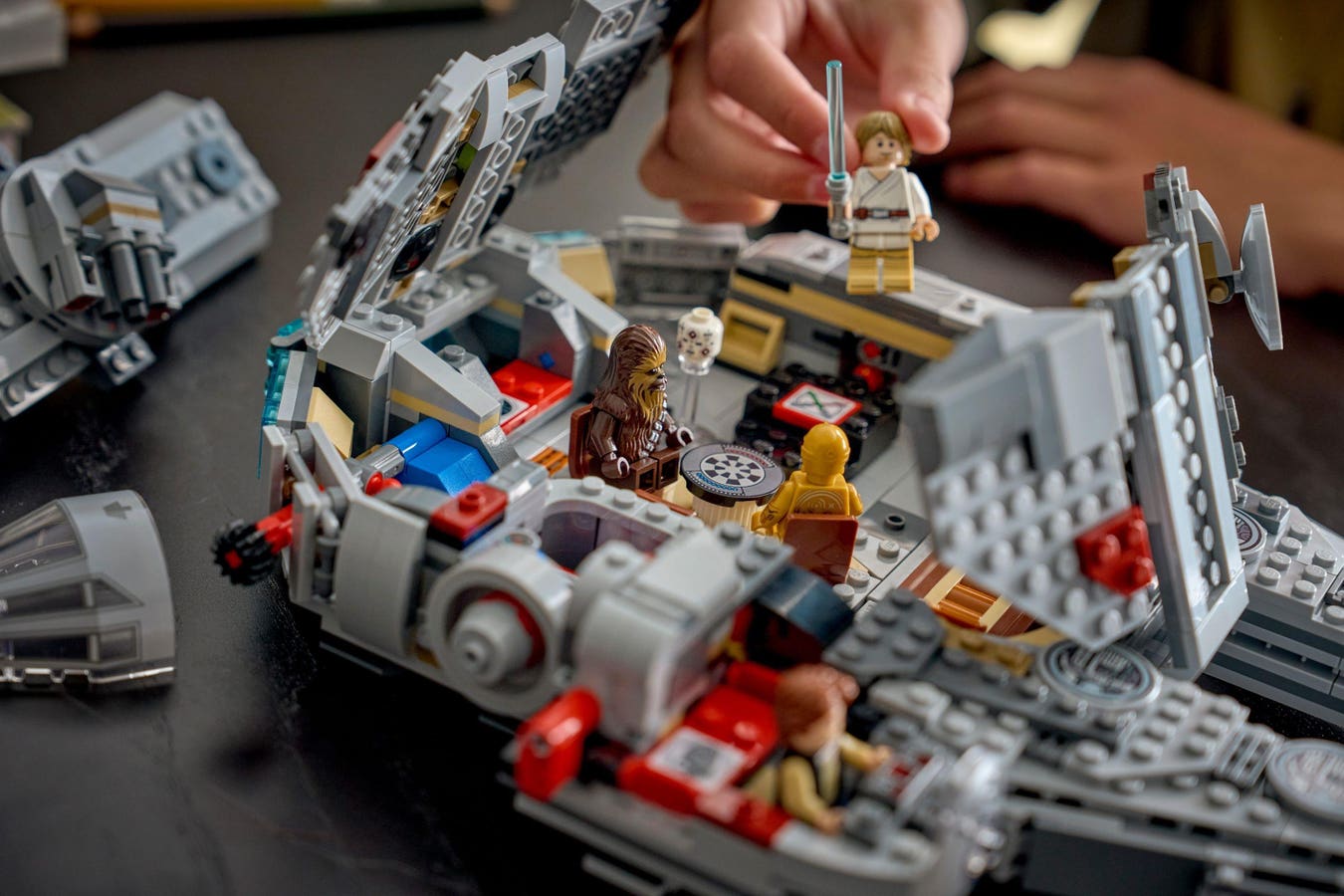
LEGO has expanded its interactive SMART Play Star Wars collection with five new sets unveiled at the Nuremberg Toy Fair, featuring franchise icon Anthony Daniels to introduce the builds. The new additions bring familiar vehicles and locations from the original trilogy to the tech-enhanced line, though all five are designated as “SMART Play compatible” rather than “All-in-One” sets. This means buyers will not receive the SMART Brick or charger with these releases, requiring them to purchase at least one of the previously announced All-in-One sets separately.
The five new LEGO SMART Play Star Wars sets include Luke’s Landspeeder, Yoda’s Hut and Jedi Training, AT-ST Attack on Endor, Mos Eisley Cantina, and the Millennium Falcon, according to the company. Each set is available for pre-order now and will arrive on shelves March 1. Pricing ranges from $39.99 for the Landspeeder to $99.99 for the Millennium Falcon.
However, the pricing structure raises concerns for potential buyers. The SMART Brick and charger combination remains unavailable as a standalone product, forcing customers to invest in at least one All-in-One set starting at $69.99 for the TIE Fighter. Additionally, some of the compatible sets command premium prices despite lacking the core technology components.
LEGO SMART Play Pricing Creates Mixed Value Proposition
The Millennium Falcon represents the best value among the new releases, offering approximately 11 cents per brick with 885 pieces total. The set includes four SMART minifigures and four interactive tags that can be transferred to other builds. Meanwhile, the Landspeeder sits at the opposite end of the value spectrum, costing over 18 cents per brick with just 215 pieces, one SMART minifigure, and one tag.
The Mos Eisley Cantina includes 666 pieces for $79.99, featuring two SMART minifigures and three tags including karaoke and drink mixing functions. Yoda’s Hut and Jedi Training offers 440 pieces for $69.99 with two minifigures and two tags. The AT-ST Attack on Endor provides 347 pieces at $49.99 with one minifigure and two tags.
Critics have expressed concern about the integration of digital technology into traditional LEGO building experiences. Some commentators suggested that SMART Play technology could undermine the classic appeal of LEGO construction, according to BBC coverage of the initial launch. The product line received significant media attention in the United Kingdom, sparking debate about the future direction of the iconic toy brand.
Interactive Features Build on Existing Digital Strategy
The SMART Play expansion represents LEGO’s latest venture into hybrid physical-digital play, following successful implementations in other product lines. The company’s Super Mario range has demonstrated consumer appetite for tech-enhanced building experiences without abandoning traditional brick construction. Similarly, the Sonic the Hedgehog collection introduced active play elements focused on physical interaction and destruction.
Nevertheless, LEGO’s core business continues to emphasize large display sets for adult collectors. Nine of the ten largest LEGO sets by brick count have been released within the past five years, indicating strong demand for traditional building experiences. Recent releases include the LEGO Pokémon Venusaur, Charizard, and Blastoise set, as well as an unannounced Lord of the Rings build expected to launch soon.
The Millennium Falcon marks approximately the 23rd or 24th iteration of the iconic Star Wars vessel across LEGO’s history, including miniature versions and promotional packs. The enduring popularity of classic vehicles from the original trilogy suggests LEGO’s strategy of revisiting familiar designs continues to resonate with collectors. Each new version typically introduces updated building techniques or enhanced features to differentiate it from previous releases.
Industry observers note that purchasing power ultimately rests with parents buying for children and adult collectors building their own collections. If these groups recognize value in the SMART Play interactive features, the product line will likely succeed regardless of criticism from traditionalists. The technology adds optional depth to building experiences rather than replacing core construction mechanics that define the LEGO brand.
For the SMART Play line to gain broader traction, LEGO will need to offer the SMART Brick and charger as standalone purchases in the near future. Expansion beyond Star Wars into core product lines like City, Classic, and Technic could also strengthen the technology’s appeal. Some fans have suggested that customizable sounds and experiences would align well with LEGO’s commitment to STEM education and creative play.
The success of these five new Star Wars LEGO SMART Play sets will become clearer after their March 1 release date. Whether the company continues investing in the technology or pivots away will depend on initial sales performance and consumer reception over the coming months.