





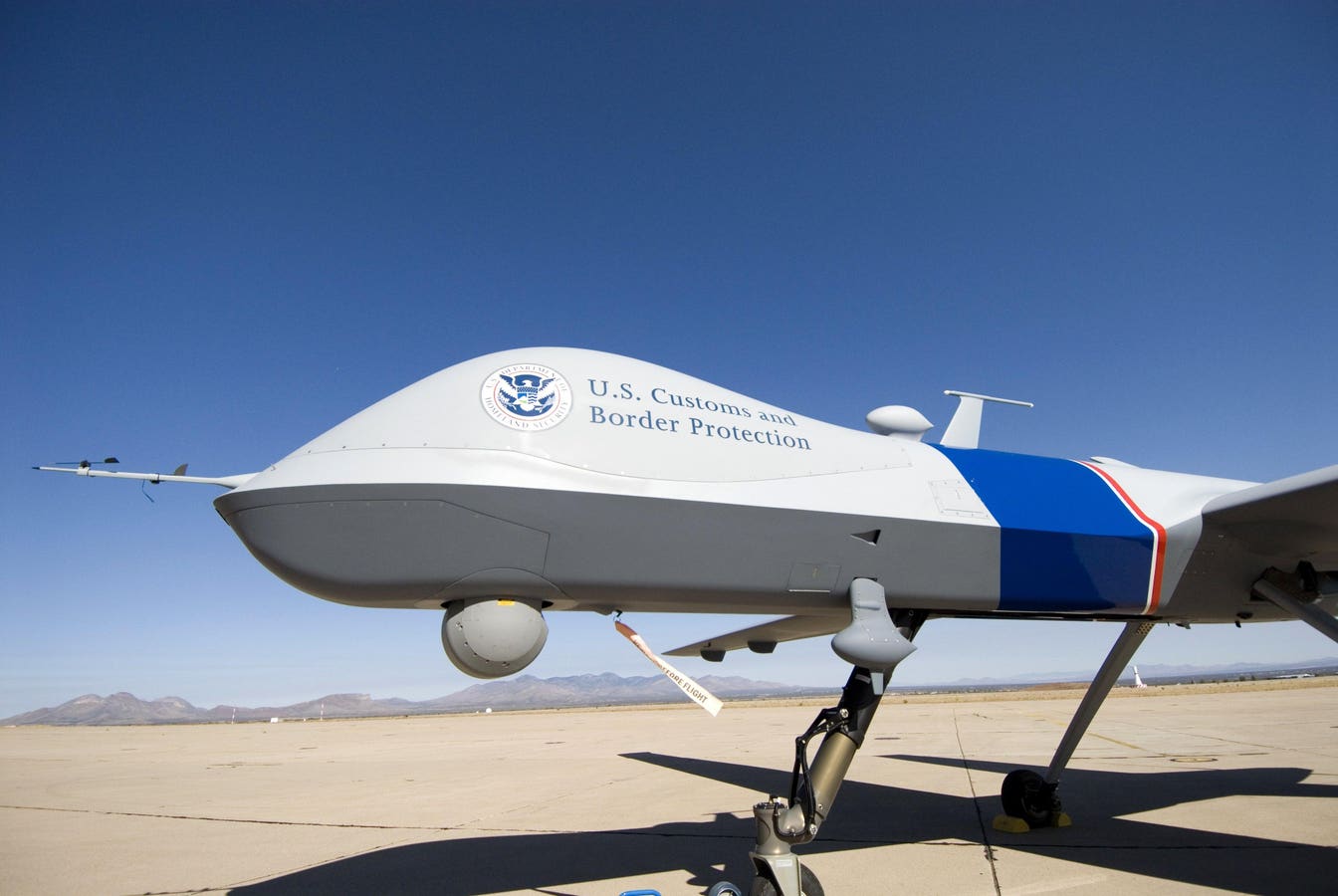
The U.S. military accidentally shot down a Customs and Border Protection drone using a laser weapon on Thursday, prompting federal aviation authorities to impose a lengthy airspace restriction over West Texas near the Mexican border. The military drone shootdown incident marks the second time this month that counter-drone operations have disrupted airspace in the region, raising serious concerns about coordination between federal agencies responsible for aviation safety and border security.
The Federal Aviation Administration responded to the incident by issuing a notice shutting down airspace over Fort Hancock, a border region in West Texas, with restrictions set to remain in effect until June 24. According to Congressional aides cited by Reuters, the shootdown occurred when military operators used counter-unmanned aircraft systems to target what they believed was an unknown drone operating in military airspace.
Communication Breakdown Led to Military Drone Shootdown
The incident resulted from a critical failure in interagency communication, according to a preliminary internal report cited by the New York Times. CBP purportedly failed to notify the Defense Department about the drone flight in the area, leading military personnel to identify it as a potential threat. The engagement took place far from populated areas with no commercial aircraft in the vicinity, according to a joint statement from the Pentagon, CBP, and FAA.
However, the lack of coordination has drawn sharp criticism from Democratic lawmakers overseeing transportation and homeland security. In a statement, Reps. Rick Larsen, Bennie Thompson, and André Carson said their “heads are exploding” over news of the military drone shootdown. The congressmen attacked the White House for bypassing a bipartisan bill designed to properly train anti-drone weapon operators and failing to address coordination gaps between the Pentagon, Department of Homeland Security, and FAA.
Extended Airspace Restrictions Impact Texas Border Region
The FAA’s notice to airmen cites “Temporary flight restrictions for Special Security Reasons” as justification for the nearly four-month airspace closure. The notice prohibits all aircraft operations over the restricted zone, with exceptions requiring special authorization from the Albuquerque Air Route Traffic Control Center for medical evacuation or search and rescue flights. Authorities have not confirmed whether the restrictions will affect commercial flight schedules in the region.
Additionally, the incident has prompted calls for independent investigation. Sen. Tammy Duckworth, the senior Democrat on the Senate’s aviation subcommittee, announced plans to request a joint investigation by inspectors general from the Department of Defense, Department of Transportation, and Department of Homeland Security. She expressed alarm at learning about the military drone shootdown through news reports rather than official channels.
Pattern of Counter-Drone Problems Emerges
This marks the second airspace disruption in Texas this month related to counter-drone weapons. Earlier in February, the FAA announced a 10-day airspace closure over El Paso for “Special Security Reasons,” briefly halting operations at El Paso International Airport. The Trump administration initially claimed the shutdown responded to a “cartel drone incursion,” but the New York Times reported the military was conducting counter-drone tests and used a high-energy laser on what turned out to be a mylar party balloon.
In their joint statement, federal agencies said they are working together “in an unprecedented fashion” following President Donald Trump’s orders to mitigate drone threats from Mexican cartels and foreign terrorist organizations at the U.S.-Mexico border. The agencies characterized the military drone shootdown as occurring when the Department of Defense employed counter-unmanned aircraft system authorities against a “seemingly threatening unmanned aerial system” in military airspace.
The requested inspector general investigation is expected to examine coordination protocols between federal agencies and the deployment of counter-drone technologies along the southern border, though no timeline has been announced for when findings might be released.