





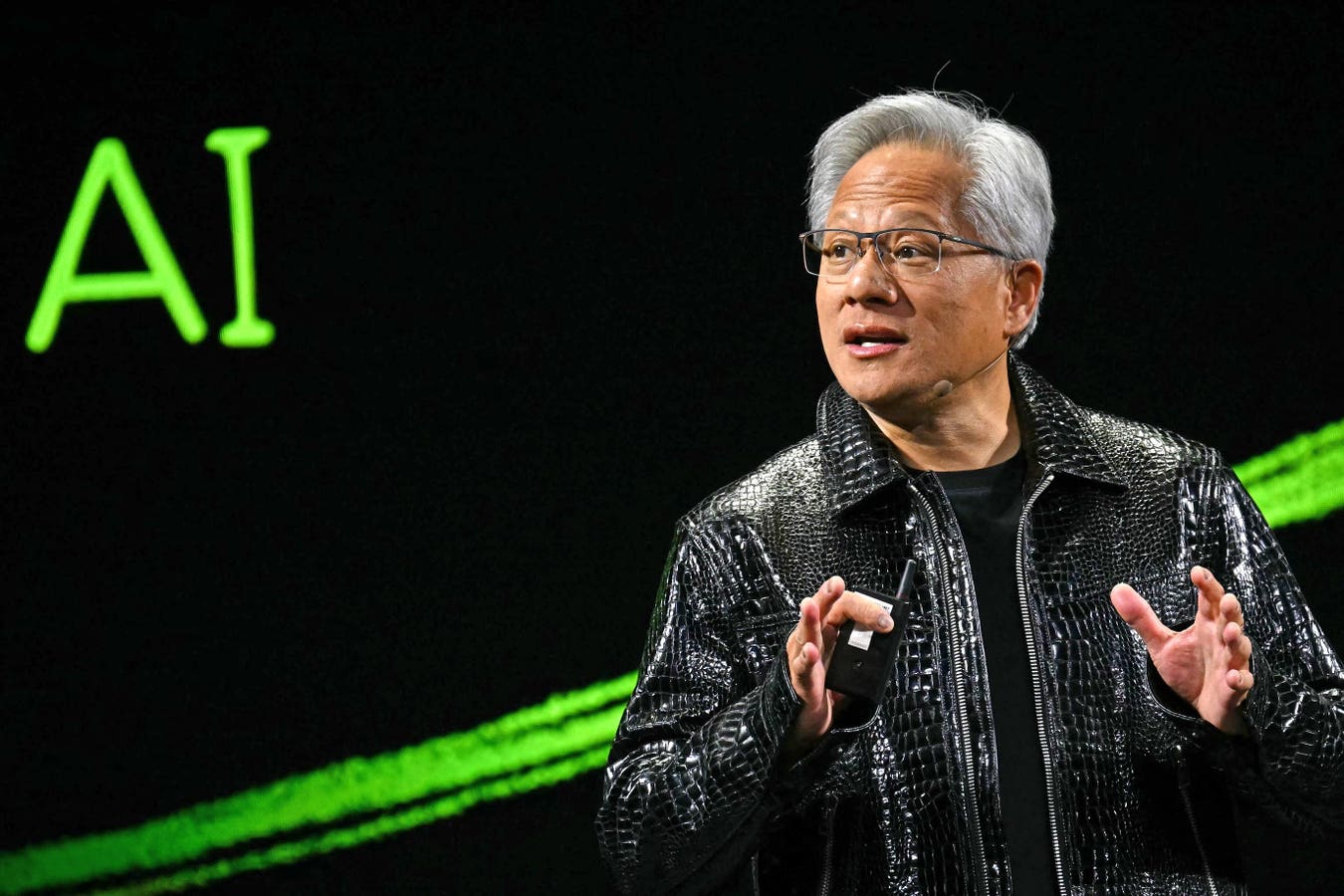
Nvidia reported quarterly revenue of $68.1 billion on Wednesday, marking a 73% year-over-year increase and exceeding analyst expectations despite recent investor uncertainty surrounding artificial intelligence spending. The chip giant’s latest Nvidia earnings report revealed earnings per share of $1.62, surpassing consensus estimates of $1.54, according to FactSet data.
The company’s full-year revenue totaled $215.9 billion with $4.77 earnings per share, both figures topping Wall Street projections of $213.8 billion and $4.69 per share respectively. Data center revenue reached a record $62.3 billion in the fourth quarter, representing a 75% increase from the previous year and accounting for over 91% of total company sales.
Nvidia Earnings Outperform Amid AI Investment Concerns
As the final member of the “Magnificent Seven” technology stocks to report quarterly results, Nvidia provided a crucial update on the artificial intelligence market’s health. The strong performance comes as Wall Street has shown increasing skepticism about AI-related investments in recent weeks, with concerns mounting over the sustainability of massive capital expenditures.
However, the company’s robust data center revenue demonstrates continued demand for AI infrastructure. The segment’s dominance, comprising more than nine-tenths of total revenue, underscores Nvidia’s position as the primary beneficiary of the ongoing AI boom driven by enterprise and cloud computing customers.
Tech Giants Project Massive AI Spending
Major technology companies including Alphabet, Amazon, Meta, and Microsoft have projected combined spending of $610 billion for 2026, according to recent earnings calls. Amazon alone forecasted capital expenditures reaching up to $200 billion, with each firm citing growing demand for AI products and services.
Additionally, WedBush Securities analysts noted earlier this week that spending forecasts for the year have exceeded expectations. Meanwhile, Cantor Fitzgerald economists acknowledged “insatiable” demand for computing power while highlighting persistent investor concerns about the scale of AI spending.
Market Volatility and Competitive Pressures
Recent developments from competitors have contributed to market uncertainty surrounding AI stocks. Anthropic’s new plugins for its Claude chatbot rattled global software stocks earlier this month, demonstrating how rapidly evolving AI capabilities can impact investor sentiment across the technology sector.
In contrast to its peers, Nvidia stands as the only Magnificent Seven stock showing gains so far this year. Shares of Tesla, Microsoft, Alphabet, Meta, Apple, and Amazon have all failed to post positive returns during the same period, highlighting Nvidia’s unique position in the AI supply chain.
Investor Sentiment and Market Outlook
Luke Rahbari, CEO of Equity Armor Investments, told Bloomberg that positive investor response to Nvidia’s fiscal year outlook could reverse the recent downturn affecting AI-exposed stocks. The company’s ability to exceed earnings expectations while maintaining strong growth rates may help restore confidence in artificial intelligence investments.
Nevertheless, questions remain about whether current AI spending levels can be sustained and when enterprises will begin seeing meaningful returns on their infrastructure investments. The gap between capital expenditures and revenue generation from AI products continues to be a focal point for analysts evaluating the sector’s long-term prospects.
Market observers will closely monitor Nvidia’s guidance for the current fiscal year and any commentary from company leadership regarding demand trends and competitive dynamics in the AI chip market. The company’s next quarterly report and management’s assessment of ongoing AI adoption will likely provide further clarity on the sustainability of current growth trajectories.