



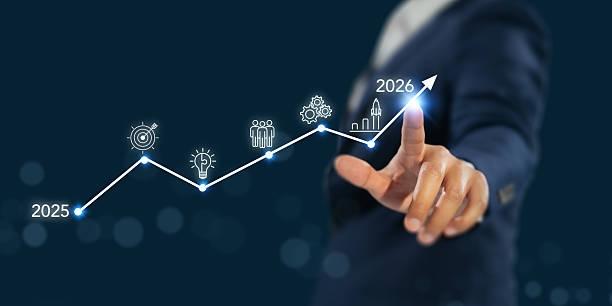
As 2026 begins, the business growth roadmap looks more promising than many forecasted just a year ago. Despite ongoing uncertainty in headlines, economic activity throughout 2025 demonstrated remarkable resilience, with businesses adapting to a stabilized interest rate environment and improved market visibility. The foundation built over the past year positions companies to pursue strategic expansion and sustainable growth in the months ahead.
According to economic analysts, the U.S. economy enters 2026 on firmer footing than at the start of 2025. Businesses have learned to operate effectively within uncertainty, recalibrating operations and building momentum based on current market realities rather than waiting for ideal conditions to return.
Economic Resilience Defied Slowdown Predictions
Throughout 2025, continuous predictions of an economic slowdown weighed on business sentiment. Concerns about persistent inflation, softening labor markets, and tighter financial conditions created widespread caution among business leaders.
However, the economy demonstrated far more durability than anticipated. Businesses continued investing in growth initiatives, maintaining operational pipelines without significant disruption. Supply chain pressures eased considerably, pricing volatility moderated, and workforce challenges became more manageable throughout the year.
This underlying strength reflected confident decision-making and realistic planning rather than fortunate timing. Companies adjusted their business growth roadmap priorities to align with evolving conditions, resulting in steady progress that strengthened their competitive positions.
Interest Rate Stability Creates Planning Certainty
One of the most significant shifts has been business acceptance of mid-single-digit interest rates as the new normal. Rather than viewing current borrowing costs as temporary disruptions, companies are incorporating these rates into long-term financial planning.
This transition has fundamentally changed corporate behavior. Business leaders are making major decisions based on today’s realities instead of waiting for historically low rates to return. The predictability of the current environment enables more accurate assessment, intentional financing structures, and confident commitment to strategic priorities.
Additionally, this clarity has moved companies away from reactive decision-making toward strategies designed for sustainable expansion. The ability to plan with greater certainty has become more valuable than access to cheaper capital.
Ground-Up Growth Gains Momentum
Economic activity is building incrementally as conditions become more predictable. Businesses are increasingly willing to proceed with projects, investments, and expansion plans that were previously delayed. Meanwhile, technology-driven efficiencies and disciplined capital deployment are strengthening organizational capabilities.
Some sectors remain cautious, particularly those managing cost pressures or uneven demand patterns. Nevertheless, the overall perspective has shifted from pause to progress, with data-driven decisions replacing wait-and-see approaches.
Adaptability has evolved from a crisis response into a core operating principle. Companies that embedded flexibility into their operations during uncertain times now possess competitive advantages as market conditions stabilize.
Housing Supply Constraints Challenge Affordability
Housing remains a critical factor in the business growth roadmap and overall economic confidence. Demand continues outpacing supply in numerous markets, creating structural imbalances that strain affordability and limit economic participation.
According to recent evidence, policies restricting development through zoning limitations or excessive regulations worsen affordability challenges. When supply cannot respond to demand, costs rise and growth stagnates across related sectors.
Improving housing affordability requires increasing supply, attracting development capital, and streamlining approval processes. Solutions emerge when investment is encouraged and projects can address genuine market needs efficiently.
Strategic Clarity Drives Success
Periods of uncertainty create opportunities for leaders who separate noise from actionable data while maintaining focus on long-term objectives. The strongest performers in 2026 will be those who act with strategic intention rather than reacting to short-term signals.
Companies now possess greater clarity about where to invest, how to expand responsibly, and when to commit resources confidently. This positions businesses to hire strategically, invest purposefully, and pursue measured growth throughout the coming year.
The economic outlook for 2026 remains dependent on how businesses execute their growth strategies and whether policymakers address structural challenges like housing supply. While uncertainty persists in some areas, the improved foundation from 2025 provides organizations with meaningful runway to advance their priorities in the months ahead.