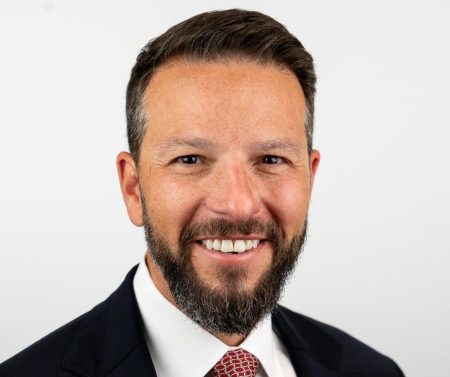






A Lexington-based wealth management team overseeing $1.4 billion in client assets has built its practice around serving fewer than 200 households, emphasizing deep client relationships and customized financial planning over volume. Musgrave Dunn & Associates, part of Merrill Wealth Management, has grown steadily since its founding by focusing on complex, high-net-worth situations for physicians, attorneys, and business owners in the Kentucky community.
Travis Musgrave founded the team after graduating from the University of Kentucky in 1991 with a degree in accounting and finance, having switched from pre-med studies. According to Musgrave, the practice started with him and “half of an assistant” but expanded deliberately, with his first full-time hire joining in 1999 and remaining with the team today.
Wealth Management Team Prioritizes Customized Planning
The deliberately small client base relative to headcount allows the wealth management team to dedicate significant time to each relationship. Musgrave says clients prefer this focused approach, noting that “clients want us in the office working, not out planning events.” The team conducts work almost entirely one-on-one rather than hosting large client gatherings.
However, the practice has evolved toward increasingly sophisticated planning needs. “The more complicated, the better for us,” Musgrave says, explaining that the team enjoys solving problems proactively for ultra-high-net-worth clients with complex financial situations.
Investment Strategy Centers on Individual Securities
The team’s investment philosophy emphasizes simplicity despite serving complex clients. Portfolios are built primarily around individual stocks and bonds rather than layered structures, focusing on what Musgrave describes as “good businesses” with strong profitability, cash flow, and leadership. Additionally, the approach prioritizes ensuring clients maintain adequate liquidity to avoid forced selling during market downturns.
“If we can prevent having to sell something in a down market, we can remove the vast majority of the risk of owning stocks,” Musgrave says. ETFs may be used in smaller accounts, but the wealth management team generally prefers direct ownership of individual securities for greater customization and control.
Meanwhile, alternatives are deployed selectively for appropriate clients. The team uses private equity allocations primarily for clients with longer time horizons who can tolerate the illiquidity inherent in these investments, according to the firm’s approach.
High-Net-Worth Focus Shapes Service Model
The concentration on attorneys, physicians, and business owners has shaped both the team’s service delivery and staffing approach. Musgrave says he has added team members deliberately, seeking individuals who could build entire careers with the practice. Senior members Timothy Dunn and Valerie Marshall work alongside Musgrave to serve the client base.
In contrast to firms that seek to maximize client counts, Musgrave Dunn & Associates has moved in the opposite direction. The team’s ratio of nearly $1.4 billion in custodied assets spread across fewer than 200 households indicates an average relationship size well into the millions, reflecting the high-net-worth and ultra-high-net-worth focus.
Market Positioning Favors Long-Term Equity Exposure
Regarding current market conditions, Musgrave says the team designs portfolios to “work in all times” rather than positioning for specific outcomes. He cites increased corporate spending, ongoing innovation, and what he characterizes as a lower-rate environment as supportive factors for equities. “All of these things tend to align themselves with an expanding economy,” he says.
However, Musgrave emphasizes the importance of selectivity within equity allocations. The team favors companies and industries capable of adapting to change, noting that investors should “own equities in a thoughtful fashion” during periods of economic expansion.
Musgrave’s guidance to clients emphasizes self-awareness about feelings toward money and risk, consistency in approach, and removing emotion from investment decisions. The team continues operating from its Lexington location, with no announced plans to expand its geographic footprint or significantly alter its client service model.